If you have a difficult time plotting, try writing or outlining your story backwards—from the end to the beginning. Writers who have a difficult time outlining, plotting, and planning their stories often benefit from this technique. You’ll need a general idea of what your story is about for this to work, and of course you need to know the ending, but you might be amazed how helpful this trick can be.
Why is writing backwards easier? Basically, instead of answering the question “this happened… now what comes next?,” you’ll be answering the question “this happened… so what would come right before that?” which narrows the possibilities for your next move and can help keep your story on track. (Incidentally, it’s also the way Joseph Gordan-Levitt’s character comes out on top in the film The Lookout.)
Writing backwards can also help you more tightly weave together your subplots, themes, and character relationships, and keep you from going too far down any irrelevant rabbit holes.
If you don’t want to write or outline completely backwards, remember that you’re free to jump around! If you’re feeling stuck in your story or novel, jump to the middle or end and write a few scenes. Many writers get stuck because they feel they have to write their story linearly from beginning to end, which results in an overdeveloped (and often irrelevant) beginning and an underdeveloped ending.
So go work on that ending! It’s much more likely that you will need to change your beginning to fit your ending than the other way around, so spend time on your ending sooner rather than later!
//////////////
The Literary Architect is a writing advice blog run by me, Bucket Siler. For more writing help, check out my Free Resource Library, peruse my post guide, or hire meto edit your novel or short story. xoxo
When you are writing a story and refer to a character by a physical trait, occupation, age, or any other attribute, rather than that character’s name, you are bringing the reader’s attention to that particular attribute. That can be used quite effectively to help your reader to focus on key details with just a few words. However, if the fact that the character is “the blond,” “the magician,” “the older woman,” etc. is not relevant to that moment in the story, this will only distract the reader from the purpose of the scene.
If your only reason for referring to a character this way is to avoid using his or her name or a pronoun too much, don’t do it. You’re fixing a problem that actually isn’t one. Just go ahead and use the name or pronoun again. It’ll be good.
Someone finally spelled out the REASON for using epithets, and the reasons NOT to.
In addition to that:
If the character you are referring to in such a way is THE VIEWPOINT CHARACTER, likewise, don’t do it. I.e. if you’re writing in third person but the narration is through their eyes, or what is also called “third person deep POV”. If the narration is filtered through the character’s perception, then a very external, impersonal description will be jarring. It’s the same, and just as bad, as writing “My bright blue eyes returned his gaze” in first person.
Furthermore,
if the story is actually told through the eyes of one particular viewpoint character even though it’s in the third person, and in their voice, as is very often the case, then you shouldn’t refer to the characters in ways that character wouldn’t.
In other words, if the third-person narrator is Harry Potter, when Dumbledore appears, it says “Dumbledore appears”, not “Albus appears”. Bucky Barnes would think of Steve Rogers as “Steve”, where another character might think of him as “Cap”. Chekov might think of Kirk as “the captain”, but Bones thinks of him as “Jim”.
Now, there are real situations where you, I, or anybody might think of another person as “the other man”, “the taller man”, or “the doctor”: usually when you don’t know their names, like when there are two tap-dancers and a ballerina in a routine and one of the men lifts the ballerina and then she reaches out and grabs the other man’s hand; or when there was a group of people talking at the hospital and they all worked there, but the doctor was the one who told them what to do. These are all perfectly natural and normal. Similarly, sometimes I think of my GP as “the doctor” even though I know her name, or one of my coworkers as “the taller man” even though I know his. But I definitely never think of my long-term life partner as “the green-eyed woman” or one of my best friends as “the taller person” or anything like that. It’s not a sensible adjective for your brain to choose in that situation – it’s too impersonal for someone you’re so intimately acquainted with. Also, even if someone was having a one night stand or a drunken hookup with a stranger, they probably wouldn’t think of that person as “the other man”: you only think of ‘other’ when you’re distinguishing two things and you don’t have to go to any special effort to distinguish your partner from yourself to yourself.
This is something that I pretty consistently have to advise for those I beta edit for. (It doesn’t help that I relied on epithets a lot in the earlier sections of my main fic because I was getting into the swing of things.) I am reblogging this so fanfic writers can use this as a reference.
A good rule of thumb: a character’s familiarity with another character decreases the need for an epithet (and most times you really don’t need one at all).
Abusers are
generally great at something called “manufacturing insecurity”. It
means, even if you’ve never been insecure about something, abuser will create
an insecurity about it, solely for the purpose of emotionally manipulating you.
Meaning, when you’re not doing, saying, or thinking what they want, they have a
go at your “insecurity”, triggering your pain, fear, guilt, shame,
everything they taught you to feel, as a way to teach you that this pain is
what you’re going to get if you fail to obey them.
It’s not exactly
hard to manufacture an insecurity (provided you are cruel and vicious), all you have to do is take a social norm and
convince a person they aren’t good enough in one or all departments. You
convince a person they’re too loud, too fat, too ugly, slow, naive, gullible, stupid, lazy,
selfish, sexual, provocative, demanding, and that this is the reason why they
will always fail, it’s a reason why they keep getting hurt, it’s a reason why
nobody will ever love or care for them. It’s utterly cruel, and an absolute
lie. Deviating from the “norm” in any way is not a reason of any of
those things, if you’re getting hurt it’s because people are hurting you, if
you’re unloved it’s because people around you refuse to show affection and
care. These things cannot be the individual’s fault, it’s always the
environment setting person up for pain. And abusers already know this. But they
make a step to convince a victim it’s all their fault, everything others do to
them, their fault. And even worse, that they deserved being hurt.
This kind of
nonsense blaming everything on unrelated trait of individual can lead to a
person getting terrified they could have somehow caused horrible things just by
being themselves, that it’s impossible to even predict what might happen to
them just because they’re “this way” or another. It creates an
atmosphere of panic and confusion, and they find themselves seeing no way
forward but to accept guidance from abuser. Abuser then pretends to know what
victim is to do in order to avoid pain and failure – of course, only up to the
point when abuser decides to inflict pain on purpose, to control and
manipulate.
You’re not stupid
if you fall for this kind of trap, it’s designed to work on people who are
self-aware, who work on getting themselves better, who are trying their
hardest. You don’t even have to lack confidence, abusers will take a confident
person and eat their confidence away. And once caught in this situation, it
might be hard to believe that someone would stoop that that kind of cruelty and
lie to you while knowing perfectly well that you are good, that there’s no
reason on earth to criticize your traits, that you have nothing to be ashamed
of. That you haven’t deserved any of it.
“if you’re getting hurt it’s because people are hurting you, if you’re unloved it’s because people around you refuse to show affection and care. These things cannot be the individual’s fault, it’s always the environment setting person up for pain. And abusers already know this. But they make a step to convince a victim it’s all their fault, everything others do to them, their fault. And even worse, that they deserved being hurt.”
“
You’re not stupid
if you fall for this kind of trap, it’s designed to work on people who are
self-aware, who work on getting themselves better, who are trying their
hardest. You don’t even have to lack confidence, abusers will take a confident
person and eat their confidence away. And once caught in this situation, it
might be hard to believe that someone would stoop that that kind of cruelty and
lie to you while knowing perfectly well that you are good, that there’s no
reason on earth to criticize your traits, that you have nothing to be ashamed
of. That you haven’t deserved any of it. “
These are all iPhone apps. I have no idea which are available on other phones.
Give some comfort and get some comfort..
comfort spot
Meditation is so healthy for you. No matter who you are. I can’t sleep unless there’s a guided meditation playing.
GPS4Soul
Headspace
Calm
Relax & Rest
Take a Break
Anxiety Free
Breathe2Relax
Relax Lite
Smiling Mind
The Quiet Place
Noise machines for those nights that you can’t hear anything but your mind..
Sleep Pillow
Relax Melodies
Journaling apps for on the go feelings that won’t leave you alone
Mood Journal
GratitudeDiary
TherapyBuddy
Everyday
PTSD patients
Reach Out
PTSD Coach
Mood Trackers that actually work and don’t suck like most
Optimism
Rise Up
For when you’re so anxious you can’t make eye contact with anyone. (trust me I get it.)
MindShift
Thisissand
When suicidal thoughts are strong, but you can’t seem to tell anyone for find any help.
ReliefLink
Hello Cruel World
Ask
Positive affirmations/reminders you’re amazing
Daily Recovery
Inspirations
Today’s Step
Affirmations
Flatter Me!
I hope this helps at least one person.. I know it sure as hell helps me. I’m sorry you’re struggling. I love you.
I love you guys! I want you all to feel loved and safe!
comfort spot doesn’t work anymore sadly, it was one of my favorite apps.
I have any to add except for Calm Harm, which helps with self harm urges
here’s the apps from this list that are available for android:
Meditation:
Headspace: Meditation & Mindfullness
Calm – Meditate, sleep, relax
Relax and Rest Meditations
Take a Break
Breathe2relax
Relax Lite: Stress Relief
Smiling Mind
The Quiet Place
White Noise:
Relax Melodies (one of my personal favorites)
Journaling:
Therapy Buddy
Daylio – Diary, Journal, Mood Tracker
PTSD:
Reachout
PTSD coach
Anxiety:
Mindshift
thisissand
I couldn’t find any of the suicide apps. Most of the positivity apps are there and there’s a bunch more if you search for any one of the one’s on the list
I was definitely a profit killer when I worked in a pharmacy (which honestly was my favorite job in the entire world, but it was short-lived and nowadays you can’t work at a pharmacy like that, it’s all tied in with corporate retail and no one should ever trust me with a cash register ever). It was not, however, actually a profit killer for the pharmacy, just for the drug companies, so no one cared. These days I do medical billing, which means I actually bill OUT from hospitals so I’m mostly spending my professional time taking money away from insurance companies.
I will now impart all of my profit killing resources onto you, in case you don’t know them. I think most of you know them, now. But just in case you don’t.
THIS IS US-CENTRIC. I’M SORRY.
1. GoodRx – this thing has an app now, so you can look up the best places to get your expensive medicines at the lowest possible prices without insurance on the go, and you no longer have to print coupons because you can just hand over your phone or tablet. Times have changed for the better with GoodRx. Definitely use it before trying to fill your scrip, because it will tell you the best place to go. (You can do that on the website, too.)
2. NeedyMeds– Needymeds is basically the clearinghouse of drug payment assistance. They have their own discount cards, but also connections to many patient assistance programs run by drug companies themselves. They are good assistance programs, too.
3. Ask your county – This is not a link. This is a pro tip. Most county social services will have pharmacy discount programs for people with no and/or shitty pharmaceutical coverage. You can often just find them hanging around at social services offices; you can just pick one up and walk off with it.
4. Ordering online – There are a few safe online pharmacies. I keep a little database in a text file on my computer. Most of them are courtesy of CFS forums, my mother or voidbat, so a lot of that is a hat tip to other people, but if you’re in need of a place to get a drug without a prescription … first I’ll make sure you 100% know what you’re doing for safety reasons and then I’m happy to turn over a link.
5. Healthfinder– A government resource that helps find patient assistance programs in your area. This might also point out the convenient county card thing. RxHope is something a lot of people get pointed to via Healthfinder that’s a good program.
6. Mental Health America – Keeps a list of their best PAPs for psychiatric medications, which can be some of the most expensive and a lot of pharmacy plans don’t cover them at all.
This is so important ppl.
Signal boost the shit out of it!
Booooooooooooooooooost
Good Rx Saved my family a hundred dollars a month while I was getting signed up for CHIP seriously it’s a life savor especially for ridiculously expensive drugs like abilify
Useful info, friends! 😉
Since many of our followers are on medications, I feel like this would be an important resource. -Luna
Also! Some drug companies have patient assistance programs where they send you the drug for FREE if you are uninsured, or if your insurance doesn’t cover that drug.
Do a Google search for “patient assistant programs” + (your med), or search the manufacturers website. Sometimes the info is online; other times you have to call.
Even some of the big name pharma companies have this. It’s certainly not all companies, or all meds, but it is worth a shot.
Before Obamacare, I lost insurance and couldn’t pay for my mood stabilizers (kiiiiinda important to have those when you’re bipolar.) I was on generic Lamictal, but I went to the official Lamictal website, filled out a form with a valid prescription, and they mailed my meds to me every month for free.
If you know anything about bipolar disease, you know that that was a literal life saver. Patient assistance programs ftw!
This is so important given the recent vote to repeal Obamacare. And the cartoon above is so on point They’re literally voting to kill people. Literally.
Some of my meds are no longer going to be partially covered by my ridiculously expensive private insurance. I just used the GoodRX website to look it up, and I can either spend $40 at Target to pay for one of them out of pocket–per month–, or I can get it at Sams Club for $4. No that is not a typo. The drug I need to take every single day to keep my allergies from spiraling out of control (yay auto-immune bullshit) is literally ten times cheaper at Sams Club. Holy shit.
So my therapist has been helping me get to grips with my ADHD, and also the concept that I’m not shit at being an adult, I just can’t do things the way everyone has always told me to do them. Like every single “organize your life” books have always left me wanting to cry with frustration, and after I got hold of a copy of Organizing Solutions for People with ADHD
by Susan Pinsky I realized that was because they primarily focus on “aesthetic” over “function”. And the function of most standard “organize your life books” is to “make things look Show Home Perfect”.
So the standard “hide all your unsightly things by doing xyz” may look nice for the first week or so, but by the end of the week it’ll look like a tornado made of pure inhuman frustration ripped through the house as I try to find the fucking advil.
To give you an example of the kind of hell I’ve been fumbling my way through the last 20 odd years: dishes will be washed and left in the drying wrack but never put away. Which means I can’t wash more dishes, which means dishes pile up, which means I can’t make food, which means I don’t eat, which means my CFS gets worse, which means I don’t have the energy to put the dishes away, and so on so forth until I have a meltdown, cry to ETD (who also likely has ADHD but has never had it confirmed) about how I can’t cope with life, and then we fix it for a while, but inevitably end up back at square one within about a week.
Pinsky’s solution to this was “remove an obstacle between you and your goal, if that means taking all the doors off your kitchen cabinets to make things easier, so be it.”
And lemme tell you, fucking revolutionary.
Laundry never ends up in the hamper??? why???? is it a closed hamper??? Remove the lid. Throw it out the window. Clothes are now miraculously finding their way into the hamper??? Rejoice????
Mail ends up spread out over every available flat surface? Put a sorting station right where your mail arrives. Put a shredder or “junk” basket under it. Shred or dump the junk immediately. Realize you only actually have two real letters that need attention, feel less overwhelmed, pay your bills on time.
Like I’m not saying this book is miraculous, but it did help me realize that I was effectively torturing myself by trying to conform to certain ideals of “perfect house keeping”, and presenting a certain image rather than just allowing myself to live in my space as effectively as possible. And why? Why was I doing that? Cause people with different lives and capabilities are perceived as the norm? Fuck that. If this was a physical problem I wouldn’t be forcing myself to conform to an ableist standard, so why am I doing it with this?
My lived space will never look a certain way, and that’s okay. It will never look show home perfect, and that’s okay. It will likely always be cluttered and eclectic where nothing matches, and that’s okay. Sometimes I will have odd socks on because sorting them out required too much mental energy, and that’s okay. Actually fuck sorting socks, just buy all your socks in the same color. Problem solved. Boring sure, but also one less thing to do, which means more time to hyper fixate on fun things. Which really, what else is my life for if not to write screeds and screeds of vampire shit posts, I ask you.
How do you balance this with your partners compulsive need for everything to be exactly so?
No matter how much either of us does we’re both still so frustrated…
I also have compulsive tendencies, so I can somewhat relate to this. And the answer probably lies in getting them to address their unhealthy perfectionism and why they feel the need to be in control and have everything be “exactly so” all the time.
Unhealthy perfectionism, while not exclusive to this, can also go hand in hand with ADHD because we’re always having to struggle so much more to get things Right to appease others, so it can become an unhealthy coping mechanism to shield us from criticism which can feel especially bad if you are a person with ADHD who also has rejection dysphoria disorder. Which I do. And a neat freak of a mother who used to scream if you didn’t do something “exactly so”. Perfectionism was my only way to protect myself for a long, long time, and it has destroyed a lot of my self worth and my ability to just live my life and get shit done. And it made me hugely angry at others for not doing things “exactly so” cause I couldn’t understand why they just didn’t care enough to do something “right”. Now I know.
Therapy has helped a lot. And a good book for me has been “Better Than Perfect” by Dr Elizabeth Lombardo. The test near the front of the book really hammered home just how incapacitated I was by my need to have things be “perfect” as a coping mechanism for other stressors.
Also cause people were asking, here’s the ADHD organization book:
When I first got officially diagnosed last month…month before…I went out and read a million and one self help books, and this by far was the most helpful for actually getting me to unfuck my living habitat and thus get into a better mental head space. Most of them just talked a big game about uncluttering your life and going minimalist, and while Pinsky also talks about culling your possessions to get them down to a manageable level, she is by no means promoting an aesthetic lifestyle. One of her opening chapters is, to paraphrase it “sure this looks ugly, but if it helps you to shower without obstacles, who cares”.
Does this book have any advice on applying this to bathing?
It’s primarily about organizing your space to get you started, but it does have some things on self care like why taking a shower or a bath can feel like such an ordeal. Overall it helped walk me through the process of trying to understand
what exactly was blocking me to begin with and then the skills for how to overcome it.
(Things like not having towels in the right space, having too many bottles of products, not having your products in easily accessible spaces).
The part I found really interesting was where one of the comments she responded to was someone saying “It takes me 40 minutes to get ready in the morning and it feels so overwhelming needing to do all the things I need to do” and her response was basically “do you actually need to do all those things? or are you putting pressure on yourself to conform to a societal norm”.
Which helped me realize that for me, part of the reason I hate showering is cause it means needing to wash my hair, which inevitably meant having to go through the process of styling it, which takes so much of my energy I’m exhausted just thinking about it. Holding my arms up causes a lot of pain, so holding a hair dryer and making repetitive motions is just added pain. Since reading that, it’s been maybe 2-3 weeks?? since I last picked up a hair dryer, and just let it air dry into a “mess”. As a result, showering is something I now get through without multiple delays or postponements, and nor do I disassociate quite so often while in the shower, meaning what used to take me 30-40 minutes, I can now get done in 10 if I have to. It’s been quite literally life altering to just…stop giving quite so much of a shit and just let myself exist and focus my energy elsewhere.
Yes, we haven’t done this in a while… but our inbox and chat are swamped with questions on the subject, so this article was very much needed.
it’s a simple list of art apps, but we know you love those 😀
Enough with the intro, here it is, a list of twelve art apps you may want to check out.
ArtRage is an art program for beginners and professionals. With its minimal interface, it’s easy to keep the essential tools at hand without stealing space from the canvas. Panels can be moved around and tools can be customised. We all know how important it is for digital artists to be able to modify brushes!
Pros: easy to use; friendly interface; essential tools from professional apps available; available for iOS, Android, Windows and Mac
Cons: it may get sluggish with big files and when using big brushes, but performances also depend on the running machine; limited selection of editing tools if compared to Photoshop – ArtRage is more of a painting program rather than an editing one.
Paid
ArtRage Lite is a different version at a cheaper price, mostly for beginners, but also for professionals if they need the essential.
Now free, Sketchbook is the famous app created by Autodesk for various platforms.
Pros: clean, friendly interface; easy to use; professional features
Cons: lack of official tutorials; doesn’t offer as many tools as other apps (it’s down to the essential); paid subscription in Adobe style for multiple licenses
Free and paid
Black Ink is a powerful little program few actually know, but there’s a reason: this isn’t your classing drawing app. What’s cool about it is the vast selection of special brushes, completely non-realistic, and definitely able to boost your creativity.
Pros: vast selection of customisable brushes; excellent performance
Cons: not very easy to use; non-intuitive interface
Paid
This is probably the most complete software for painting, drawing and animation. It was originally known as Manga Studio, but with its updates and addition of features, it became Clip Studio Paint.
This doesn’t say much about the quality of the features themselves considering the affordable price (if you haven’t used the app yet, that is), but among graphic apps, this one is the top seller.
Pros: professional features for illustrators; layout tools for comic/manga artists; 3D reference models; customisable tools; various sales with special prices
Cons: the interface may not appear intuitive at first; the program may lag (again, performance also depends on the running machine)
Paid
GIMP is the famous open source image editor originally created for GNU/Linux and available for OS X and Windows.
Best known as Photoshop’s main competition, this is a manipulation program for both beginners and professionals who love design.
It offers many professional features, making the program a powerful tool.
Pros: professional editing tools; supports different formats; supported by different platforms; active community
Cons: in spite of the simple design, many options are hidden and it takes time to discover all the features; slow startup
Free
Krita is an open source painting app created by artists for artists.
Pros: easy to use; intuitive interface; great brush workflow; brush stabilizer; customisable brushes; general good performance; very enthusiastic, although small, community
Cons: it may be slow or even crash depending on the running computer and the app’s version; very few editing tools compared to Photoshop
Free
MediBang Paint is a free and light app for drawing and painting, perfect for manga and comic creation.
Pros: vast selection of brushes; cloud sharing; friendly, minimal interface (non-desktop app); also available for iPad, iPhone and Android
Cons: requires an account to use all features; non-intuitive interface (desktop version)
Free
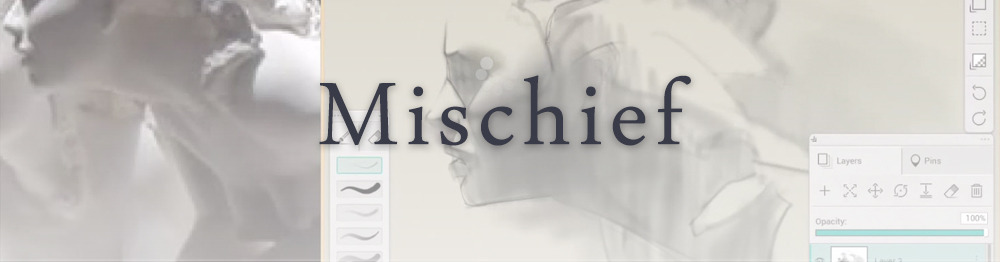
Mischief is a sketching app with essential tools, useful for brainstorming and ideation.
Pros: infinite drawing canvas; friendly interface; easy to use; cheap pro version
Cons: few updates; offers only the essential (but that’s the point); no editing/adjustment tools
Free and paid
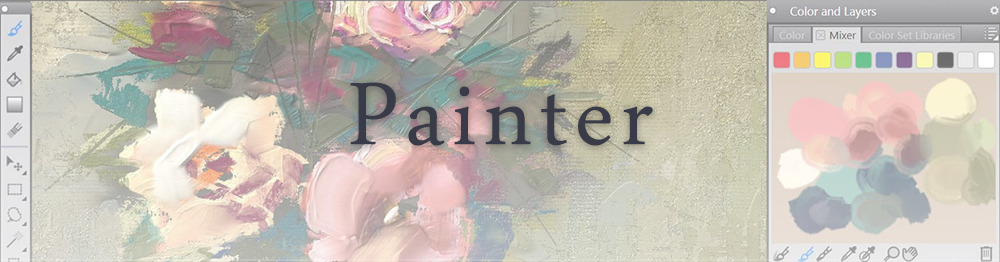
Corel’s jewel, Painter is the most famous software that offers digital tools able to give a traditional feel to brushes and canvas.
Pros: different selection of media; many professional features; PS-friendly
Cons: certain brushes may work slow; not easy to use at first; the software may crash (this is the most common report); pricey
Paid
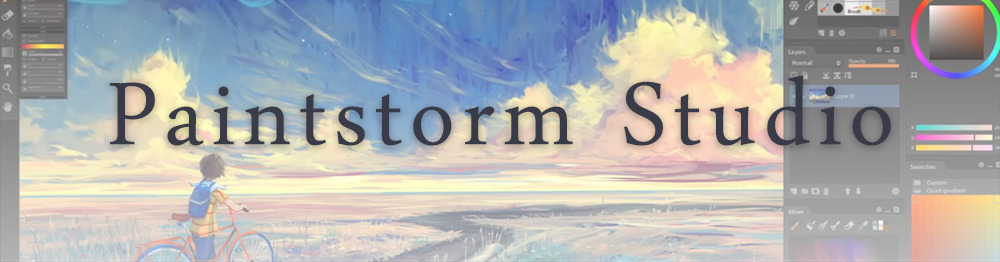
Paintstorm Studio is a professional software for digital painting. It’s focused on the use of brushes and blending, which makes the software a little gem in the digital painting field.
Pros: good brush workflow; brush stabilizer; “close gap” feature; customisable interface and tools; professional features; affordable price
With the very sensitive Apple Pencil, Procreate is so easy to use that many artists chose the iPad over the most famous graphic tablets.
Pros: friendly interface; makes it easy to organise files; excellent brush workflow; customisable brushes; video recording; affordable price
Cons: hidden features; only available for iPad
Paid
SAI is a simple app for artists who want to focus on painting and drawing.
It’s well known for its good pressure support and its essential tools for manga artists, but SAI can be used by any kind of artist who wants to paint.
Pros: easy to use; friendly interface; light software; customisable brushes; tons of (non-official) tutorials
Cons: limited selection of tools, even basic ones; limited canvas sizes and uses; it might crash from intensive work, especially with big canvases and brushes; supports only RGB colour mode; lack of support
Paid
We hope you’ll find this list useful.
If you think there are other apps that should have made this list, don’t hesitate to let us know!
Found this reddit post. This kinda makes me feel better. And it’s something I think about sometimes because I always feel like regardless of how hard I work on something I don’t get anywhere.
Psychology is amazing folks and more of it needs to be common knowledge
YOUR BRAIN IS AN ORGAN AND DEPRESSION IS A REAL PHYSICAL THING THAT HAPPENS TO IT. THIS IS REALLY SUPER IMPORTANT TO REMEMBER.
Yeah your brain literally isn’t making the corrections and selections it’s meant to when you’re depressed – dean Burnett has a very accessible & plain English section on that in “the idiot brain” (is the last chapter)
I find this really helpful (which is a bit odd, because generally I’m not one for the totally chemical approach, given meds not helping me much) I wish my diagnosis person had told me about this when I was freaking out about my loss of ability to learn/pick up new things. It had not occurred to me that it could be part of the depression package.





 Rambles & Rabble