Go to your nearest target. Buy a two pack of pushup bras(24$ for 2), and target’s bra inserts (12$). Then go to your nearest Walmart and buy the Vasserette Control Shapewear Panties (2.50 each), they do wonders for helping your tuck. There you go! You just saved yourself a lot of money, you can afford to buy enough to wear every day, and best of all you look fabulous. –@twidx
recs for trans women are so rare on tumblr!! spread this, people.
Please reblog this, in total it’s about $38.50 to make a huge difference for a trans woman/trans feminine person.
But don’t worry, most writers are and I’m here to help because reading them is making me cRAzY.
I’m writing this because I’ve read three otherwise great romance novels back to back featuring characters dealing with PTSD (or PTSD symptoms) and each one of them made the same dream mistakes. I honestly can’t think of a fiction book I’ve read that didn’t make these mistakes, so I thought I’d compile a handy dandy list of mistakes and how to fix them.
Lucky for you, I have PTSD and a ton of fellow veteran friends who deal with these symptoms.
*This is based on my experience and things told to me by friends. This is not to say that the below doesn’t happen in real life, only that it’s not as common as you might think.
The issue with these dreams is twofold: on one side is the psychological accuracy of the dream and on the other side is how you’re using the dream within the narrative.
Oh an Black Sails spoilers-ish ahead.
1) Stop writing the dream as a shot-by-shot accurate retelling of Traumatic Event.
Listen, not only do dreams seldom follow reality, but our own memories are tricky at best. I don’t remember getting beaten up because a) it was horrifying and we block stuff like that out and b) I was going in and out of consciousness. It would be pretty strange for me to dream something I don’t even fully remember. Our brains are simply not wired to do these vivid factually-accurate cinematic retellings.
My friend dreams things that did happen, but in his own words those dreams are always wrong in some noticeable or bizarre way. For instance, he’s getting chased through the streets of Iraq by a werewolf.
2) Dreams are informed by reality, not direct reflections of it.
It’s entirely likely my friend dreamt of a werewolf in Iraq because I got him binge watching Supernatural and the two ideas merged in his dreamstate. But see, that’s how dreams work.
The trauma event exists as a constant in his subconscious, but he has all this other information right there in his conscious mind all day, every day. In dreams, there isn’t a clear delineation between that information.
My dreams are often dependent on whatever I’ve fallen asleep watching on television. The themes are consistent, but not the content.
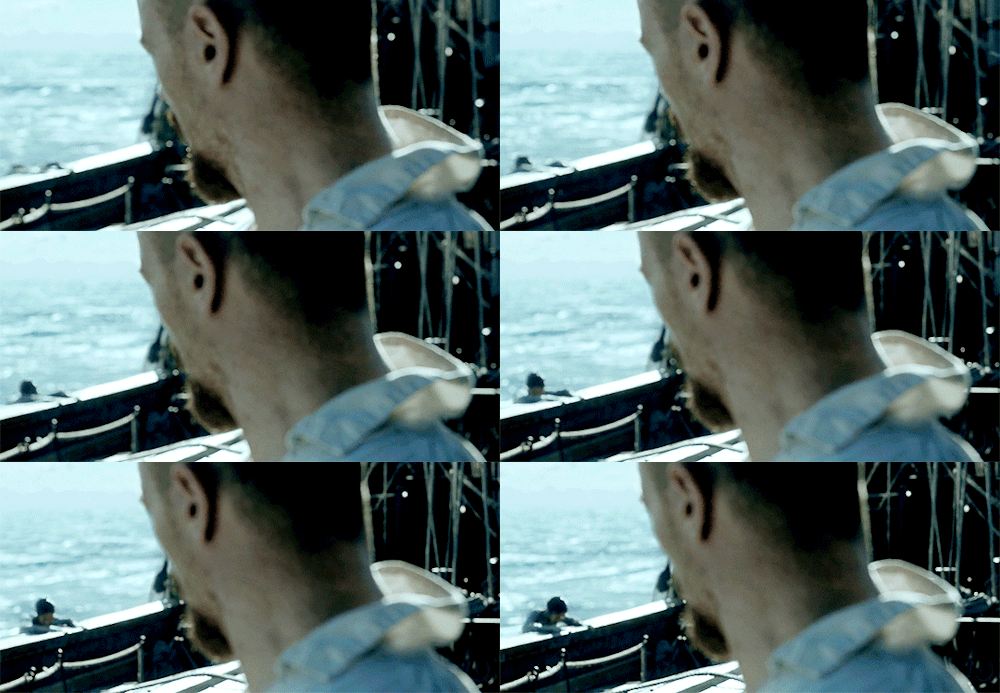
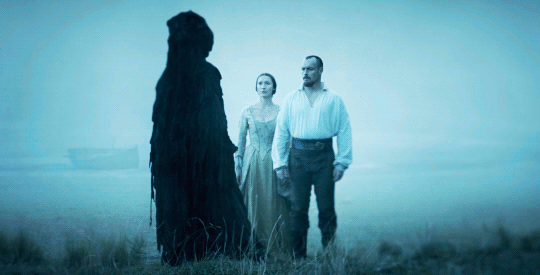
In Black Sails, Captain Flint’s trauma dreams feature his dead partner and friend following him around his empty ship. You have an element of the trauma (the animated corpse of his friend) + his daily existence (his ship). The two things intersect to form these unsettling nightmares as expressions of his fears and grief. He never once relives the event itself in his dreams as shown on screen.
Speaking of…
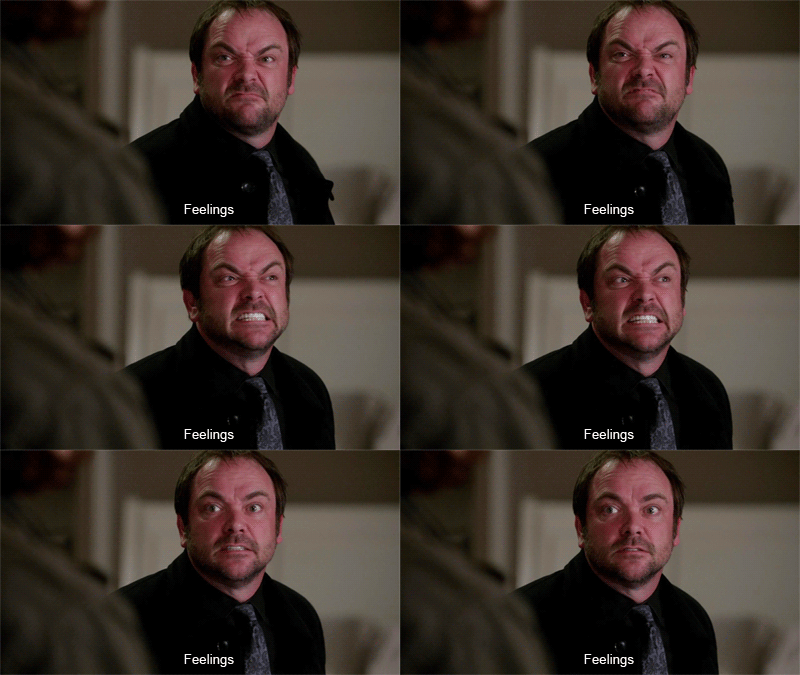
3) Trauma dreams often revolve around feelings, not necessarily the events themselves.
The PTSD package generally includes heaps of shame, guilt, anger and fear. As someone who survived a beating when I should have had control of the situation, my dreams tend to revolve around fear that people will know I’m a fraud or being unable to act in a dangerous situation.
Again, it’s entirely common for trauma victims to not remember large chunks (or the whole thing) of the trauma event. So why should their dreams be stunningly accurate? What we remember are feelings. Real strong feelings.
You cannot go wrong if you write your trauma dream around feelings, not a specific event.
4) If you present trauma dreams as expressions of themes, you can let go of the trauma dream as an exposition dump/way overused suspense trope.
You know you’ve read this: MC has dreams that are a shot-by-shot retelling of Traumatic Event that always cut off right before Traumatic Event, so that the Big Reveal must happen by a discovery later in the novel.
If I were the MC in a book, the easy and common thing would be to use the “dream sequence” as an expository retelling of Traumatic Event as a way to give some backstory to why I might be surly, mistrustful, afraid to try something new, whatever, and to clumsily shoehorn in suspense where there doesn’t need to be.
The much more interesting thing might be if my dreams were inconsistent in content but consistent in theme. In one I’m on an alien planet (because I fell asleep watching the Science Channel again) and the ground opens up and I fall into a pit from which I can’t escape because I am helpless. In another a man is watching me while I sleep where I am again frozen and helpless. This would force the reader to think: what is the recurring issue in these dreams? Why is it important? What is this telling me about this character and what happened to her?
It could be a personal preference, but I’d rather see the Traumatic Event either told in narrative flashbacks (not dreams) or verbally retold by the character in question. Let the dreams tell me something deeper about the character. It’s not that I was beat up, it’s that I feel like a failure because of it. One of these things is a shallow factual detail, the other tells you something about me as a person that I’m sharing with you, gentle reader, because talking about this stuff is healthy.
5) The Traumatic Event doesn’t have to be a big secret.
In Black Sails, we know what happened to Captain Flint’s partner. It happened in real time in the show. That didn’t make his uber disturbing dreams less disturbing or mysterious. Fans still debate exactly what the symbolism was and what they were telling us about James Flint in those moments. We do know from the dreams that he was disturbed, obsessed, and also monumentally guilty and blaming himself for what happened.
The mystery was perhaps more heightened by the fact that the dreams weren’t direct reflections of reality. We know who this person was, what she believed, and why she died. That Flint is imagining her screaming silently in his ear is horrifying and discordant with what we know to be factual. This adds emotional complexity to his character and the decisions he’s making while suffering these dreams.
^^^this didn’t happen. It was a dream. A real unsettling dream.
Once you let go of the concept of the trauma dream as a literal retelling and exposition dump, you have the entire dreamscape to work in other narrative elements, like symbolism, metaphor, foreshadowing, etc.
Describing a male love interest as an “Adonis” or “Greek God”
I mean, first of all, this is a lazy way to avoid describing how someone looks. I get that description isn’t easy for every writer to do, but this one thing is incredibly overused and relatively easy to cut out of the writing during the editing process.
Unless the person is literally a Greek God, and even if they are, maybe try to find a photo or drawn reference for the character’s features and use that when describing them.
Lest the previous point give the wrong impression, this does NOT mean waxing poetic about a character’s hair, eyes, and the outfit they’re wearing (down to their shoelaces) for several paragraphs.
I mean many of us are probably guilty of staring at a crush for too long, but infodumping details on a reader is going to bore them to tears and they’re much more likely to skim the material than remember it.
When introducing a character, try to space out the descriptive details a bit and work them into other parts of the story rather than when the reader first meets them. Look up one of the many writeblr guides on describing characters to see more detailed ideas on how to do this.
Also, please, please, please don’t keep repeating someone’s eye/hair/skin color several times unless it’s 100% relevant to the plot. I promise, the reader got it the first or second time.
Continued behind the cut:
Snooping on the love interest while they’re bathing/swimming/etc. and ogling their body in full detail
For a while, I hoped this creepy trope had died out by the mid-2000s, but then I saw it in fics published in 2015 onwards so, no, it has yet to be killed with fire. Blech.
First of all, I don’t care if your character is super attracted to their love interest: Creeping on them in a private moment kills the romantic vibe because it violates consent. How is the reader supposed to trust that consent won’t be violated in other ways?
In other words, if the love interest doesn’t consent to voyeuristic observation, don’t do it, because it isn’t romantic.
Once they do get close to becoming or have become a couple, protectiveness =/= possessiveness.
I kinda feel like there must be some confusion on the part of some writers between the two characteristics, but they are NOT the same. Also, the latter one is a big red flag of toxic relationships, not healthy ones.
Some protective characteristics: supports partner through crises, helps them if they are at risk of harm, knows when to express concern and offer help but (most importantly) knows when to back off and let their partner do things without their involvement.
Some possessive characteristics: knowing (and following) their partner’s every move, threatening to harm their partner or another person if the other person even makes eye contact with their partner, and refusing to back off when their partner wants to handle a problem on their own.
Treating romance as a magical band-aid for other personal problems
Okay, here’s a typical romantic plot I’ve seen: Girl meets Boy. Boy has mental health problems. Girl and Boy fall in love. Boy’s mental health problems magically disappear from the story.
Admittedly, I picked the more sexist version of this trope a la “I can fix him”, but it’s unfortunately common. I think mostly why it crops up so much is because a) some writers might wish it really was that easy and b) a failure to consider characters’ lives outside of their relationships.
Point being: Love is not a magic fix. If someone is dealing with serious problems at the beginning of a story, then they need to continue to deal with them after they have a partner, just like in real life, healthy relationships. Otherwise, the problem in the story just feels like a gimmick thrown in there to add angst.
*Based partly on years of reading romantic stories on fan sites and fictionpress, partly on my mild obsession with Meg Cabot that lasted through high school (I really, really, liked The Princess Diaries and Airhead and Teen Idol), and partly on other books, but dammit, I know an overused thing when I see it
There are a lot of different words to describe the roles that characters play within the narrative, some characters can occupy multiple roles at once, but these terms are not always synonymous. Confusion can occur when one assumes that one term encompasses another with which it is often paired.
These are some terms and a brief overview of how they will be used on this blog.
Protagonist: The leading character. Not necessarily of any particular moral persuasion, can be a goodie, a baddie, or an in-betweenie, depending on the story being told. Can be a group of people either working together, or who inhabit the same narrative.
Antagonist: A person or the person who opposes the protagonist, there can be multiple antagonists for any given protagonist. Does not indicate any particular moral code except that they are in conflict with the protagonist.
Main Character: The leading character. Often in an ensemble cast there is one character who is more central to the story. (Most generic term)
Focalising Character: Characters through which we see the story, their perceptions and knowledge will colour the narrative and influence the reader’s opinions. A story can have one or many focalising characters, but only one can be used at a time (a ‘switching POV’ is a shift from one focalising character to another).
Hero/ heroine: Often a protagonist. Is a character who is explicitly siding with the moral good.
Anti-hero: Often a protagonist. Is a character who is the centre of a heroic narrative while not having ‘conventional’ heroic traits.
Villain: Often an antagonist. Is a character who is explicitly siding with the moral evil.
Anti-villain: Often an antagonist. Is a character who may be explicitly siding with moral evil, but likely has non-villainous motivations or attributes.
Foil: A particular type of antagonist or villain who’s personal qualities compliment or contrast in such a way that they illuminate thematic elements of the protagonist or hero’s character.
Secondary Character: A character who is not in the central protagonist/ focalising character role. Can have significant role/ impact on the narrative, but is not the focus of the narrative.
Minor Character: A smaller role than the secondary characters, may appear only for a few lines, attention to detail on minor characters can help make world building feel more ‘real’.
Narrator: The character who is ‘voicing’ the story. May or may not be a character that is personally a part of the story. (Not all stories have explicit narrators, but all stories have narrative voice!)
Next time you are feeling down, about to binge, going on a date, or just need to pamper yourself, do this. I just did it and I can not stop rubbing my legs together. It feels like I paid for that over expensive pedicure at the salon.
Ingredients
1 1/4 C Sugar (Yup, plain, good-ol’ white sugar)
1/2 C Oil (I used olive oil, but you can use any oil, coconut oil, baby oil, canola oil)
3 tablespoons Citrus (Lime or lemon)
1-2 Razors
Mix everything together in a bowl.
Soak your legs in the tub for 5 minutes.
Shave your legs.
Rub some of this mixture all over your legs. The sugar will help rub off all dirt and dead skin. Rub, rub. Feels like a mini massage.
Rinse it all off, shave again. I would use one razor per leg if you have two. You will be rinsing this razor a lot. I was GROSSED out by the amount of dead skin I was “shaving” off. It was insane! Trust me, you’ll see.
Rub your legs again! Second coat of wax, oh yeah.
Rinse off! You can use a mild soap to help get some of the oil off.
Lotion your legs up, and feel the silkiness!
Now this isn’t just geared to ladies…. guys, if you want to get lucky, I suggest you offer to rub your ladies’ feet with this mix too. It feels awesome, and when you get lucky, you will be thanking me that her rough grandma feet aren’t cutting your legs, if ya know what I’m saying… hahaha.
I have silky arm pits too!!
Try it, I swear, You will want everyone to touch your legs.
i just did this and after about 2 or so months of not shaving this is the most incredible thing i have ever done its like my legs arent even legs they’re some sort of ancient fabric made only for powerful pharoahs
i highly suggest this even if you don’t shave use it on your feet or shave your pits or your pubes with it because you will feel like a fucking deity
HOLY SHIT I JUST USED THIS AND???? I FEEL LIKE MY LEGS ARE MADE OF ANGEL WINGS
THIS IS THE BEST THING IF YOU DON’T USE IT YOU’RE CRAZY
I just tried this and it feels so good I want to cry
I’VE BEEN LOOKING FOR THIS POST FOR LIKE 6 MONTHS THANK YOU TUMBLR
I’ve also heard that “mens” razors work way better, and are cheaper than “womens”
When I worked at a mental health crisis centre, I couldn’t believe how many people came to us, not because of their own problems, but because they were so lost in a friend’s pain that they couldn’t take it anymore. I saw a lot of people who were so worn down from helping someone else that they couldn’t sleep, eat, socialize or focus at work or school. They were consumed with guilt every time they put down their phones, went to sleep, or dared to enjoy themselves and have a good time. All because they had no idea how to set boundaries.
Helping your friends through a tough situation is a wonderful and noble thing to do, but it only works if you’re mentally in a place to do so. If you’re dealing with issues or mental illness of your own, you’re not always capable of being someone else’s shoulder to cry on 24/7. And that’s okay. Sometimes, you have to put yourself first. You can’t help someone else if you’re a mess yourself. You can’t save a drowning person with a sinking ship.
Telling a friend that you’re overwhelmed and you need a break is one of the hardest things you’ll ever have to do. Honesty is the best policy – don’t go radio silent on them, or avoid answering their messages. Be honest about how you’re feeling, and what you need from them. If you’re stuck on what to say and how to start the conversation, here are a few suggestions. Feel free to copy them exactly:
It’s really hard for me to admit this, but I’ve been feeling like I’m on the verge of a breakdown lately. I love you and I care about you, but I need to take some time to take care of myself for a while.
I’m really concerned about you, but I honestly don’t know how to deal with this and I’m worried I’ll say the wrong thing. I really think that you should talk to a professional about this.
This is hard for me to admit, but I have a lot going on in my life right now, and it’s getting to be too much for me. Would it be okay if we talked about lighter stuff for the next little while?
You deserve more support than I can give you. I think you need to tell a close family member or professional about what’s going on.
It seems like every time we talk about this, things are worse for you. I’m worried that my advice isn’t helping you at all, and I think you should talk to someone more qualified than me.
I’m really worried for your safety, and it breaks my heart, but I can’t keep you safe all by myself. Would it be okay if we told someone else what was going on?
I’m sorry, but I can’t answer my text messages 24 hours per day. I really want to make sure that you always have someone to turn to if I’m not available. Are there some other people you would trust with this? I can help you tell them, if you’re not comfortable doing it by yourself.
I hope these suggestions are helpful – best of luck to all of you, and make sure to put your own mental health first when you have to.
While you are worrying about whether beta readers will steal your ideas, there is a more genuine threat on the horizon.
When offered a publishing contract, please do all your research before you sign. There are a number of fakes and scammers out there, as well as good-intentioned amateurs that don’t know how to get your work to a wide audience. I won’t tell the heartbreaking stories here – there are too many.
Being published badly is worse than being never published.
It can destroy your career and your dreams.
The quick check is to google the publishing house name + scam or warning.
But, to be sure, check with these places first. They aren’t infallible (nothing is) but they can help you protect yourself. They are written and maintained by expereinced writers, editors, publishers and legal folks.
This is really important, so if you are a writer or have writer friends, or you are a writing blog, please reblog it.
Just to let you know, PublishAmerica changed their name to America Star Books.
HEAD’S UP, WRITER TYPES: THIS IS AN IMPORTANT PSA!
Also applies to many so-called freelance sites that are just content mills, and may not pay unless your work is used, even if the contract seems designed otherwise.
Listen, reading these is like legit reading horror stories. When it comes to publishing your writing, always, always, ALWAYS do your research. Not only will it help you avoid scams, but it will also be likely to help you land a much better fit for an agent/publisher/whatever. Knowing more is never going to hurt.
Do your research before displaying your work out there, because your writing deserves the best! 💛



 Rambles & Rabble