here’s some of my favorite things to use when writing!! several of my friends and prob lots of my followers are writers/fanfic authors, and maybe you’ll find some of these to be super helpful!
Apps/Programs
Evernote: a great notebook app that keeps short notes handy! you can tag them them to keep them organized, so this is useful for jotting down ideas or scenes for different stories!
Hiveword: an amazing online novel organizing program! it lets you organize characters (and input all kinds of misc info about them like hair/eye color, religion, aliases, and goals), scenes, plotlines, items, and settings! I recommend this 100% to anyone writing a novel-length work or anything with a long plot to keep organized!
Write or Die:an app that forces you to get thoughts down as a rough draft. you can set a timed word goal and various levels of reinforcement: the kindest mode just gives you a popup warning reminding you to keep writing if you pause for a while, but the strictest mode will delete your writing letter by letter if you stop! this works great for getting creativity flowing without the intrusion of an inner editor!
Prowriting Aid:this is an AMAZING tool for editing!! it catches adverbs, diction, style, homonyms, sentence length, eloquence, you name it, and even gives suggestions for correcting the errors! (you have to sign up for a free membership for editing over 1000 words, but still, free!)
Internet Typewriter:a simple but fantastic typing program! you can choose from several fonts, text and background colors, and set word goals for yourself! there’s also the option to give your typing that nice clacky sound of either a manual or electronic typewriter! (you can also save your documents directly on the site after signing up)
editMinion:another simple but useful program! it searches your text for common errors such as passive voice, cliches, weak words, and adverbs. bonus: highlights words of latin, greek, and germanic origin!
Hemingway Editor:an incredibly useful online editor! not only does it catch adverbs and passive voice, it also measures the grade level readability of your writing and estimates how long it would take to read!
Yarny:an easy-to-use novel software! lets you organize notes for “people,” “places,” and “things,” and also keeps “snippets” of your story organized!
PenZen:an incredibly distraction-reducing text processor! activate the full screen option, and all there is is a white box in which to type. no tempting toggles or buttons to play around with!
Creativity Boosters
Writing Prompts:offers not only prompts, but lots of generators such as random words, random subjects, character names, and others! really great for challenges and/or sparking ideas!
Creative Writing Prompts:prompts from all different categories including children’s, easy exercises, practical, abstract, and prompts that can be finished in 5-10 minutes for a quick jump into the writing mood!
Rainy Mood: the comfy sound of rain is pretty, non-distracting background noise that helps keep attention on your work!
Coffeetivity:offers the white-noise ambiance of coffeeshops, universities, and diners! good for when you need some noise to keep you alert, but not distracted!
Other Useful Sites
Phrontistery:a dictionary full of unusual/obscure words. not only does this increase your vocabulary, but a lot of these words can also be used as prompts!
Reverse Dictionary:here’s where to go if you know the meaning of a word, but can’t think of the actual word! just input the definition or related concepts, and it will show you a list of similar words!
Written? Kitten!:cutesy positive reinforcement for writing! input word goals, and every time you hit another 100, 200, 500, or 1000 words, a new picture of a kitten, puppy, or bunny will appear at the side of the word processor!
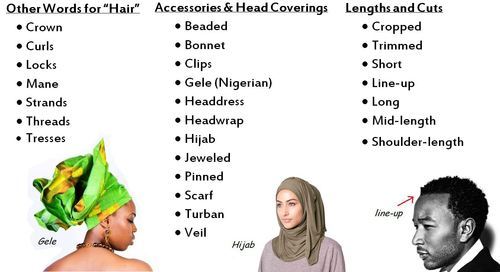
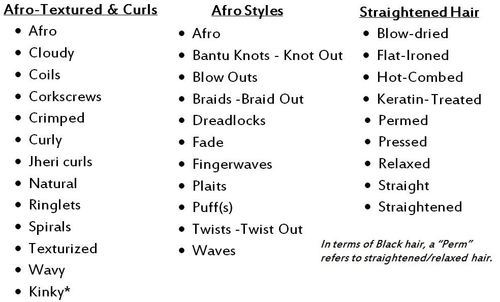
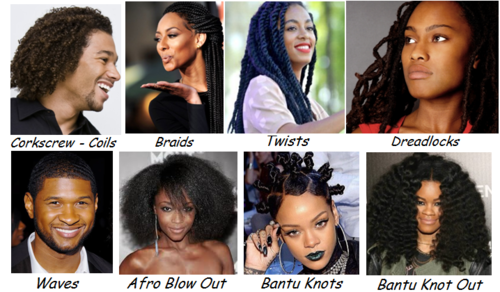
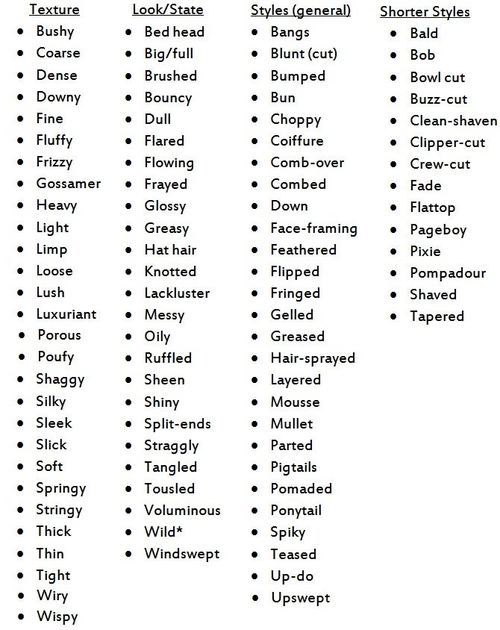
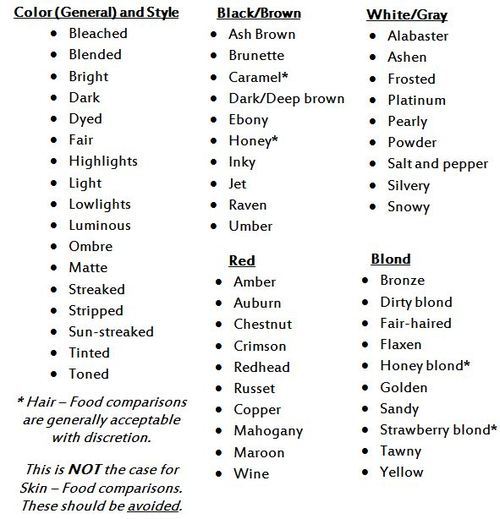
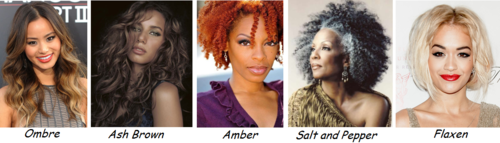
This began as a guide to describing Afro/curly hair but of course, I got carried away. From look and texture of hair, colors and various styles, this guide serves as a thesaurus of sorts for hair, as well as pointers for use in your writing.
Culturally Significant Hair Coverings:
Know the meaning behind head wear and why it’s worn, when and by whom, such as a Native Nation’s headdress, before bestowing a character with it.
Appropriative Hairstyles: Keep in mind that Afro styles should be kept to those in the African Diaspora, such as dreadlocks, cornrows + certain and many braided styles.
Tread carefully describing Afro hair as “wild” “unkempt” “untamed” or any words implying it’s unclean or requires controlling.
“Nappy” and “wooly” are generally words to stay away from, the first having heavy negative connotations for many and the latter, though used in the Holy Bible, is generally not acceptable anymore and comes off as dehumanizing due to Animal connotations.
There are mixed feelings on calling Black hair “kinky.” I’m personally not opposed to the word initself and usage depends on the person’s race (I’m more comfortable with a Black person using it vs. a Non-Black person) as well as their tone and context (if it’s used in a neutral or positive tone vs. negatively/with disdain). Get feedback on your usage, or simply forgo it.
Combination Words: Try combing words to illustrate look of hair. A character with springy coils that dance across her shoulders with every movement, the man with thick silvery hair slicked back into a ponytail…
Mind Perspective: Depending on POV, a character might not know exactly what cornrows or a coiffure style is, at least in name, and it might make more sense if they described the hairdo instead. More defining terms might come from a more knowing source or the wearer themselves. One book I read described a girl’s afro puff as “thick hair pulled up into a cute, curly, poufy thing on top of her head and tied with a yellow ribbon.”
POC & Hair Colors: People of Color’s hair comes in all shades and textures. There are Black people with naturally blond and loosely-textured to straight hair, East Asian people with red hair, and so on. Keep that in mind when coding characters if you tend to rely on hair color alone to denote a character is white vs. a Person of Color.
Related Tropes: There are tropes and discussion related to People of Color, colored hair, and light-colored hair and features.
When I’m looking at a story, one of the simple things I look at is setting. There are so many aspects to setting, so let’s just look at a few:
1) Is your milieu intriguing? Many authors will set a story in the most blasé of places. Often, the story is set “somewhere in the USA”. While for certain types of stories this may be completely appropriate, in most cases it’s not. It’s as if the writer has suffered brain death and couldn’t bother to come up with a real milieu. In most cases, it helps if you choose a particular place to set your story, and a particular date.
2) Is the world fully created? If you’re using a real-world setting, then “creating” that world is a matter of capturing it—learning its history, culture, and future. It’s not enough just to research a setting, you have to know it, get it into your bones. This usually means that you must travel to that setting and spend some time there. You can’t just blow through Amarillo, Texas and expect to really know the place.
In a science fiction tale, if you want to set your story on a planet, then creating a setting might require you to decide what kind of star system your planet is set in, along with the planet’s composition, rotation, axial tilt, number of moons, type of atmosphere, and so on. You may have to think about how to create alien life-forms, and develop their life-cycles, and perhaps create their histories, languages, and societies. Just getting those kinds of details takes some concentration.
If you’re creating a fantasy world, then you may have to look even further—into creating the flora and fauna of your world, along with cultures and subculture, the magic systems and economic systems, societies, languages, histories, religions, and so on.
So I look at how robust your setting is. I consider how fully developed it is. I ask myself, “Has this author put enough thought into the setting to create the illusion that this is a real place?”
[WRITING IN THE DARK] is a mix for writers looking for inspiring and yet unobtrusive music. Over the years I’ve found myself returning to certain tracks — in part for the feelings they evoke— but mostly for their ability to aid my writing process without distracting me from the story. The above is a selection of my favorites~ ♥︎
Ever since I answered this question, people have been asking me for my favorite music tracks to listen to— well, here you go! These are seriously some of my favorite tracks to listen to while writing, “Schala’s Theme” in particular tends to sneak into every single one of my books. I hope you enjoy listening to this as much as I enjoyed making it~ ♥︎
Want more writerly content? Follow my blog for your daily dose of prompts, advice, and writer positivity: maxkirin.tumblr.com!
So you’re writing your villain, the ultimate “bad guy,” the antagonist. Whether you’ve had experience with the world’s evil or not, an antagonist is a must in any story (though “evil” and “antagonist” do have separate meanings). Before you write the baddest bad guy to ever bad, remember that a critical teacher, a political rival, and even nature can present just as much of a contrast to your protagonist as a raging sociopath. Often “too evil” can present far more of a problem than “not evil enough” because the villain, bad as they might be, should still be human. Here are some guides I hope will help in writing believable (but still scary) bad guys:
Often, in hopes of making the scariest villain possible, writers jump to the “insane” to psychopaths and sociopaths, anyone who stands outside of “the social norm.” It should be noted, however, that a very small percentage of sociopaths or psychopaths are violent or participate in criminal behavior. But in case this is the route you choose to go down (which can be written excellently as well), here are some more resources:
Whether your antagonist is the most evil person alive or simply doesn’t see eye to eye with your protagonist, the most important thing to remember is to make sure he/she/other contrasts fully with your main character. They must create an obstacle, a road block, must present complications to your main character’s goal; but don’t forget to give them their own story as well. No one, not even the bad guy, should be two-dimensional.
Hey, I remember you! It’s nice to see you again~ ♥︎
Now, I think that there is a bit of a misconception in your question. You see, being reactive (or proactive) is independent of a character’s goals. I have to agree that we see so many stories that revolve around characters trying to change/save the world that we tend to overlook (or worse, look down) on stories that deal with maintaining the status quo.
Before I jump into the answer to your question, I want to make it very clear that there is absolutely nothing wrong (at all) with the fact that your character is just trying to maintain his ideal version of reality. That is his goal, the thing driving him into action, and there is nothing wrong with it!
Hell, the reason why I love the character of Steiner so much is that he is this ideal taken to the extreme, as he is so dedicated to following orders and trying to restore the status quo (he knew) that he is willing to ignore the fact that he is being used and manipulated, and his character arc deals with him realizing that he has the power to choose the reality he wishes to protect.
I… I really like FF9, okay? Leave me alone.
That being said, let’s talk about Reactive vs Proactive Characters.
I believe that this whole debacle is the exact same as Show vs Tell. I think that some writers look at the extreme Reactive characters and sort all of them as ‘bad.’ While in reality they are not character archetypes, but simply modes that a character can take.
Before I go any further, let’s define the difference.
REACTIVE CHARACTERS only react to the problems going on around them. They do not take the initiative and only resort to taking action after something has gotten in their way. This is basically 99% of all superheroes (Superman is the worst offender of this).
PROACTIVE CHARACTERS focus on pushing forward their goals. They take initiative as much as possible and always try to strike first. Ironically, this is basically every cartoon villain ever. Seriously. Think about it. Team Rocket always acted first.
Now, that said, what is the problem with reactive characters? I personally feel that people confuse Reactive with Passive, because Reactive characters are the bread and butter of disaster stories. You can’t proactively deal with an earthquake or an asteroid about to crash into earth. You could even say that characters in zombie stories are Reactive, since (really) any time they try to proactively work towards improving things they end up having to react to zombies.
Again, I feel that people tend to look at Reactive characters and say that they are bad because they are not pushing forward their goals. But— if a character has already achieved their goals, then they are simply reacting in self-preservation, right?
And, let’s be honest, it’s pretty much impossible to write a character who is 100% reactive or proactive all the time. Sometimes people plan ahead, and sometimes they need to react to the hurdles in their way.
As long as a character is taking meaningful actions (some people like to call this ‘plot’) then it doesn’t matter if they’re being proactive or reactive, since ultimately they are working towards what they want.
Keeping the status quo, or making it anew c;
I hope this has been helpful! if you, or any other writerly friend out there, has any more questions please don’t hesitate to send them my way~ ♥︎
So you’ve got your characters down, generally, and now it’s time for your outline!
That is, if you’re pretty much totally swinging towards the former in the architect vs. gardener theory, like me. It’s tough being a fastidious plotter. There seems to be a lot of romance surrounding the gardener half – it feels more creative and artistic, but that isn’t true. There is beauty in assembling before the fact! Don’t let anyone tell you otherwise! I’m going to try to bring some of that out.
Disclaimer: I don’t think my method will work totally definitively for anyone but me, because basically what I’ve done over the years to get an outlining method I’m most comfortable with is take my favorite parts of different outlining methods and sort of just combine them all. However, I hope that this guide will push you in the right direction, and help you develop your own personal perfect outlining method. (Also: this guide was made with novels in mind, but you can tweak it to fit other types of narrative, too.)



 Rambles & Rabble
