Please feel free to send in all the different examples of lube you’ve seen in fanfiction that… really should not be used as lube.
Also check out the genitals list!
‘Help, all of my characters are the same!’
We’ve been asked this question a few times so I decided to write a post on it rather than just answer one person. I hope this is somewhat useful…
Some things to bear in mind when you’re creating a character:
- Appearance;
- Personality;
- Motivation.
Appearance
A lot of people say, ‘Characters just pop into my head!’ or ‘My characters come to me, I don’t go to them’. That’s great and all but if you literally have a line of brown-haired, blue-eyed white guys walking out of your mind theatre and into every single story you write then it might not hurt to be a bit more decisive…
I find that the only characters in my head that resist big changes are the ones that are the most concrete. Once you’ve spent a long time working on a character’s background and motivation, it gets harder to change the ‘bigger’ things about them (such as ethnicity, eye colour and build). So you really need to work these things out in the beginning.
When you’re imagining a character, if you feel yourself leaning towards that age-old template of symmetrical features, blue eyes, brown hair… stop yourself. Start with the obvious things like hair colour, eye colour and skin colour. Change them into something you might not have considered before. Then, what visual characteristics does the character have? A hooked nose? Small eyes? Big ears? Hairy hands? There’s more to a character than their face, after all. Try to imagine their whole body and how it is different from that of the other characters’. Even the way they stand can put a big difference between one character and another.
If your whole cast is one race (e.g. fantasy race you made up) then think about individual differences. No one race of people are identical down to the last DNA strand so give us a good selection of characters for the reader to see that.
Although in actuality, it isn’t appearance that decides your character. It’s more their…
Personality
Some main elements of personality are:
- Likes/dislikes;
- Hopes/fears;
- How they view the world around them;
- Everyday behaviour/disposition compared to;
- How they act in extreme or ‘new’ situations and finally;
- Intelligence, speech pattern and beliefs.
My best example to demonstrate how defining a personality can be is by looking at story-telling media such as anime. When you watch a new anime show, disregarding art style, most of the characters are a set of hair colours and eye colours because they all have that identical body template about them.
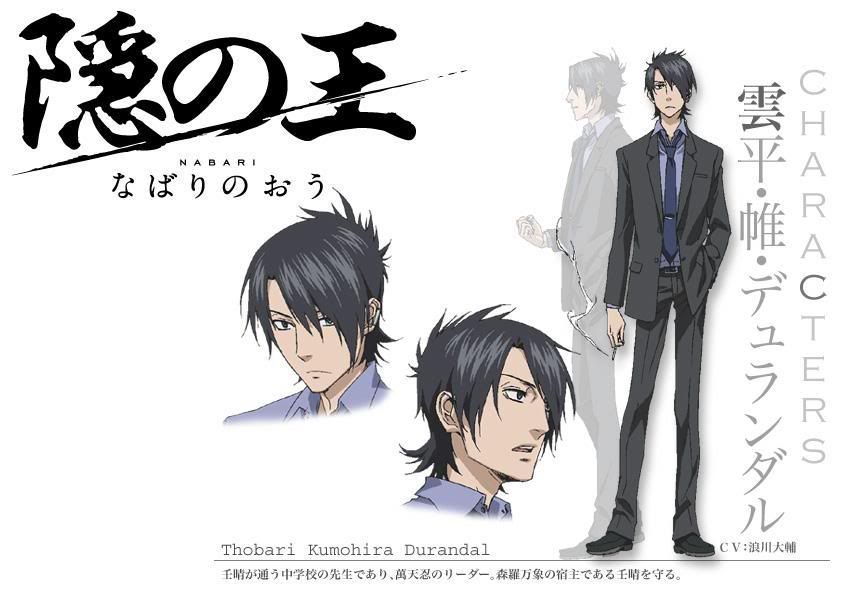
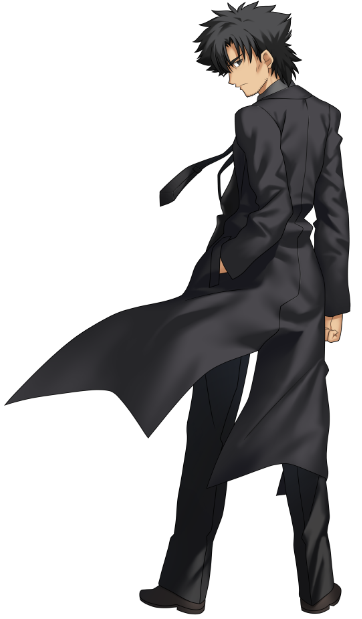
However, one great thing about anime is characterisation. Even if you have two characters that look almost identical (in terms of hair/eye colour and build), it is their personality that captivates your interest and puts a difference between them. I have a pretty bad habit of liking anime characters with dark hair and dark eyes, you know, the guys who wear suits and are a bit edgy and all, ‘leave me alone, I’m angst-ing’? Compare the likes of Kumohira Tobari from Nabari no Ou with Emiya Kiritsugu from Fate/Zero and you’ll see that, for all they share a tendency to wear suits, smoke cigarettes and have a similar appearance, they couldn’t be more different.
Finally, that leads onto the last and most important feature of your character:
Motivation
This is not just what they want to achieve in the story, but the inner morals and experiences that drive them forward from day-to-day. The kind of things that separate a guy who is comfortable killing anyone to achieve his idea of world peace from a guy who can’t bear to hold a gun or injure another, even if they ‘deserve’ it.
I can guarantee that once you start delving into the minds of your characters and really explore who they are, you’ll start to notice differences between them, even if they look almost the same. This is where their distinctive voices will appear, telling you how they speak and articulate themselves. Their outlook on the world and the way they have experienced it will shape the person they are to be at the beginning of your story.
Sometimes, it can be all about their personal journey. That is what sets them apart from the other characters sharing the same space in your head.
So, yeah… This has been a very basic guide on how to create characters and appreciate the differences between them… I hope it has been at least a little helpful. Check the links below for more thoughts on this matter and as always, feel free to add in your own thoughts or to correct me where I’m wrong.
Most of all though, thank you for reading…!
– enlee.
Further reading: (7 Steps Towards Character Diversity, My characters all sound and act the same =(, How to Creative Distinctive Character)
How To Get Closure
How To Get Closure
We all hear that you need to get closure on a relationship before you can truly move on – but how do we go about getting it? There is no magic formula for closure. It’s basically anything you need to have happen in order to feel like the relationship is really over. Without closure the relationship essentially still feels like an open case of unresolved feelings and issues and we need to find a way to shut the book to move on. Here’s some ways to help get closure:
· Wait. It’s unlikely that you’ll break up Monday, get closure Tuesday and be over it on Wednesday. Closure really comes after a certain amount of time has passed and you are able to gain some perspective on the relationship that you weren’t able to when you were in it or freshly broken up. You might see your ex in a different light, or realize something about yourself that you didn’t know. So be patient and don’t expect it to happen overnight. Breakups take time to heal, above anything.
· Vent. Find some good friends to give you a shoulder to cry on and let it all out. Or write it in your journal. Either way, start talking to get out whatever feelings you have bottled up. You won’t be able to release your ex from your life if your feelings are still inside of you. As you vent, you might work through the relationship enough to be able to move on, or you might come to some realizations that you’re better off without them.
Sorry if someone’s already asked this or a similar question, but in my story one of the characters starts to lose their mind, at a decent rate, do to a sort of Infection. (best example I can give are the Ghouls from the Fallout series, they’re exposed to so much radiation they literally become feral.) however I have no idea how I’d go about portraying that. You wouldn’t happen to have any tips would you? Please and thank you! C:
Forgive me for not knowing for sure what you mean by ‘decent’ rate; I’ll try my best to answer this considering. A lot of my examples will be zombie based, but please don’t think this means your infection is or has to be the same!
There can be a few ways this kind of infection can take hold:
- World War Z movie style, where an individual becomes infected mere minutes after being targeted.
- The Last of Us style, where it can take several hours before an individual fully ‘turns’.
- Ashes style, where the exact time it takes for an individual to ‘change’ is varied or unknown.
I’m going to guess that you’re aiming for the ‘takes a while, but not too long’ route. So, let’s give it an incubation period of about two hours maximum (although I can imagine there will be individual differences in the rate of infection from person to person).
Rabies (link tw: disturbing images) is a disease that can have neurological consequences on any warm-blooded animal. Even though it incubates for a couple of months in humans before becoming severe or untreatable, it’s good to brush up your knowledge on any and all viruses as it will give you a real-life example of how the effects of each take hold. If you need your own virus to move at a quicker pace or to be more lethal, then take creative license…! You can even crossover the symptoms or characteristics when making your own deathly diseases.
The main stages of an infection (using Rabies as an example):
- Flu-like symptoms. In a lot of zombie/infection stories, the infected report feeling unwell before anything major happens. This makes it easier for the individual to dismiss the symptoms as anything to worry about, allowing the virus to rage without intervention. Flu-like symptoms include: aching joints/muscles, blocked sinuses, headaches, shivering, feeling both hot and cold, nausea, loss of appetite.
- Neurological disorders. Generally things that tell the infected person that they might have more than the flu. Includes: anxiety, increased agitation, paranoia.
- Neurosis. The individual may be completely out of their mind at this point, acting in a way that is ‘inhuman’ or uncontrollable. Such as: suffering audible and visual hallucinations, expressing abnormal behaviour, delirium.
Basically, any virus or infection happens in stages. Imagine it like a layered cake. You continue to suffer the symptoms of the last stage as you move onto the next stage. The symptoms accelerate as the virus attacks and defeats your immune system. Like how a cold starts out as a few sniffles and sneezes before becoming full-blown blocked sinuses, aching limbs and whooping coughs.
How to show it:
- Focus on body language. As a person becomes more delirious, their movements become more erratic and difficult to control. They may lash out, make abrupt or sudden movements without cause and be unable to communicate coherently.
- Highlight that something is ‘not quite right’. Characters will notice when someone they know well is behaving strangely. Before the infection has fully taken hold, the sufferer may be in denial about the extent of their problems. A well-meaning relative might be told, ‘I’m fine’ or ‘It’s just a dizzy spell’ several times before something more serious occurs. Likewise, the relative can deny that the infected is ill or untreatable when things get sticky.
- Don’t be tame with your infected characters. A delirious or otherwise ‘mad’ character will not put thought into their actions. Their movements will be sudden, hard to anticipate or predict and severe. There might not be any reason for certain behaviours – they are just unable to properly consider and control their own actions. Rabid dogs that were once docile, for example, bite and show aggression before the owner can understand why their beloved pet has lashed out.
I might have gone a little too in-depth here but I wanted this guide to cover all areas in case I misread your question. Hope it helps…!
– enlee.
do you have any tips on writing abusive relationships and how one gets out of them or how to make them non-abusive? two of my characters are in a relationship where one is controlling the other’s life down to minute details, even going as far as locking him in his room at night ‘for his own good.’ her main reason of being so controlling is that he’s blind and thus can’t do anything himself. any tips or guides on how to write it would be great. thanks~
There is this article floating around which is worth a look at. I’ll try my best to answer your queries one-by-one:
- General tips for writing abuse.
Tread carefully and consider the message you’re hoping to deliver. I wouldn’t recommend writing anything that stands to romanticise domestic abuse as the abuser doing it for ‘the right reasons in the end’.Abuse in a relationship doesn’t happen because the abuser wants to help their partner. They want to help themselves. They’re paranoid, domineering and violent. They will justify the abuse so that they’re not to blame. ‘You made me do that’, ‘You drove me to it!’ are two common responses the abuser has after they have harmed their partner.
Often, where a woman is the abuser, she has had some history of abuse herself.
Everything an abuser does serves to drain the victim’s spirit until they believe the way they are living is normal. That is the form of ultimate control. The victim eventually sees being locked up at night, being snapped at, beaten and manipulated as normal and something to be ashamed of, because it is somehow their fault.
No matter what their friends and family tell them, the abused partner can’t see the truth of the problem. They come to accept the abuse and even make excuses for it. Many abuse victims will have their own reasons for putting up with the violence – perhaps they have children, fear being left alone or are terrified of breaking away into the realms of unfamiliarity. Often in the case of men, they are deeply afraid of ridicule.
It is when the victim manages to escape that the abuser becomes more desperate. They have usually deluded themselves into believing that the abused partner has no other path in life but to go back to them. Think about how an abusive character might behave and what tools they have at their disposal to exert further control as their world crashes around them.
- How does one get out of an abusive relationship?
What is your character’s limit? What will be the thing that makes him sit up and realise that the way he’s living isn’t normal?
The best thing a victim can do is speak up about their abuse. Once they acknowledge that what is happening to them is wrong and seek help, they begin the process of leaving that part of their lives behind.
The reasons for a victim leaving can differ. Maybe they meet somebody else and realise love isn’t supposed to be what it is with their abusive partner. Maybe the abuser is violent to the children and it provokes the victim to fight back. It just depends.
- How to make a relationship non-abusive?
End it.
I hope this answer was somewhat useful…
enlee.
Originality: When Writing, Don’t Overthink
I have a problem with my writing. Whenever I get a new idea, I always feel like it’s been done or it’s too cliché or soppy or cheesy. I try to tell myself just to write and not worry about it, but the feeling is always there and it makes it very hard to write. Any tips? – malibubarbiepunkprincessFear not, this is actually a common feeling among writers. I’ve felt it, you’ve felt it, probably everyone around here has felt it as well. There are many things you can do, but in the end, they just take two things: effort and patience.Effort
To what, you might ask? Effort to write the story. Effort to convince yourself your story is important and it needs to get done, because only then you’ll know if it’s too cliché or soppy or cheesy–and you’ll be able to fix it.
When you’re typing away, you have to practice the exercise I like to call “not caring”: you’ve got an idea, and you can’t wait to write it away–do it. Just do it. Listen to some nice music and write freely, because this has been bugging you for days, and you shouldn’t stop yourself just because some annoying voice tells you that you can’t do it because others have done it too already–very, very few people would get their novels published if they listened to that same voice.
If you think it needs some planning or outlining, feel free to do so. Create the skeleton of your story’s body, but always remember that is only the beginning.
A piece of advice that has stuck with me is that you should avoid seeing ideas as good or bad and start seeing them as strong or weak. Ideas worth your time are the ones you should write, and they tend to be the ones you really, really like. If you’re completely in love with this idea, or just enjoy it a lot, allow yourself not to give a damn how everyone else does things, or how it sounds. What matters is how you do it, and how you will make it sound.
Example Two: My story is similar to a published story.
- If you have plagiarized a published story, put down your pen and go sit in a corner and think about what you’ve done. Even so, you haven’t written anything wrongbecause you haven’t actually written at all. You plagiarized.
- If you have written a story with tropes, names, or other things in common with a published story, then your are in good company. Those published stories have tropes, names, and what-have-you in common with other stories, and those stories share similarities to other stories and on and on to back into a time when we couldn’t even write our names with sticks in the sand. Originality is pretty overrated. In fact, if you share some aspects of your story with another writer, it might even be a relief to know that your story is more likely to have a reader base.
In short, outright plagiarism notwithstanding, there is nothing wrong with having aspects of your story in common with other writers. However, if you are worried that your story is plagiarizing, have a few people to read it over and tell you what they think. If they think you’re unintentionally plagiarizing, then you’ve got some changes to make.
From Your Writing is Not Wrong
Patience
Breathe deeply and focus, C from writeworld wrote a good thing on it, so I don’t think there is much to add here. Patience also takes effort on your behalf. Remember: this is only a draft, and after it, you should wait some time before starting to edit.
Long story short:
- Have an idea.
- Find out if your idea is worth pursuing (Do I like it a lot? etc.)
- If you like this idea, congrats! Write it.
- It it’s worth it, effort and patience are the way to go.
- Fuck it. Finish it. Keep going.
One more extra thing:
“Be sure to ‘notice’ ideas when you have them. Stop. Take the time to consider them seriously. And if your gut tells you they’re compelling, be fearless in their pursuit…, we live life only once. So, rather than avoiding the risk of trying, avoid the risk of not trying. Nothing is more haunting than thinking, ‘I wish I had…’.” – Tim Westergren
-Alex
Hello! I’m planning on writing a deity for my story. The problem is, I planned on making the deity neither male nor female. Also, I’d rather not refer to the deity as “it” and I don’t think I could keep repeating the name. Thanks in advance!
Gender neutral pronouns are your friend.
-Grammar
Any advice on writing fight scenes? (They’ve always been a tough one for me)
Hello! I have a difficulty in describing smells in general, and was wondering if you guys have tips on describing smells. Thanks!
The lovely and wonderful Evvy made a really good post about smells a little while back. Go check it out!
Otherwise, there’s nothing I can really say to help you other than:
- Practice writing descriptions of smells and;
- Take note of smelling descriptions in books.
I’m on reading Ilsa J. Bick’s Ashes trilogy at the moment and the main character has a heightened sense of smell. So there’s one book rec to get your started. Followers, feel free to suggest more.
Hope this helps!
enlee.


the more you know, kiddos.
If you’re out there tagging, keep this info on hand
 Rambles & Rabble