


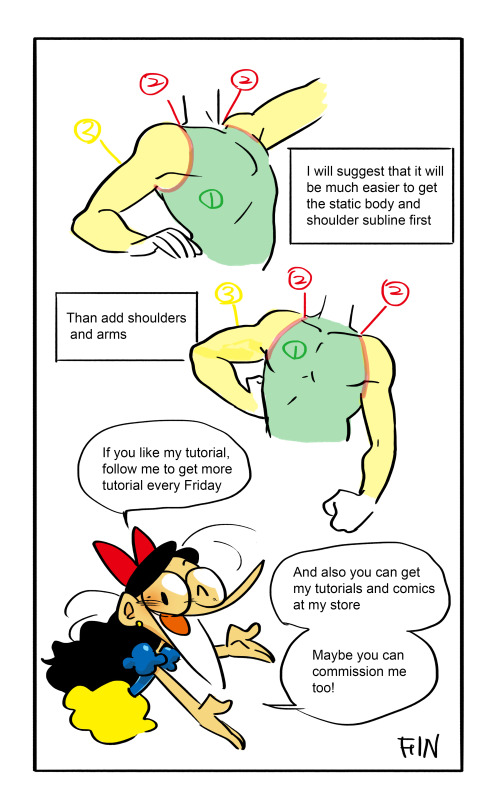
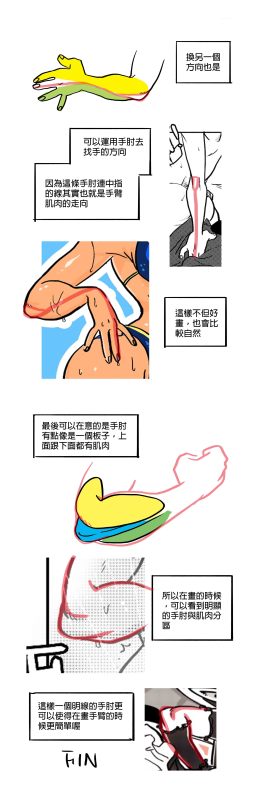
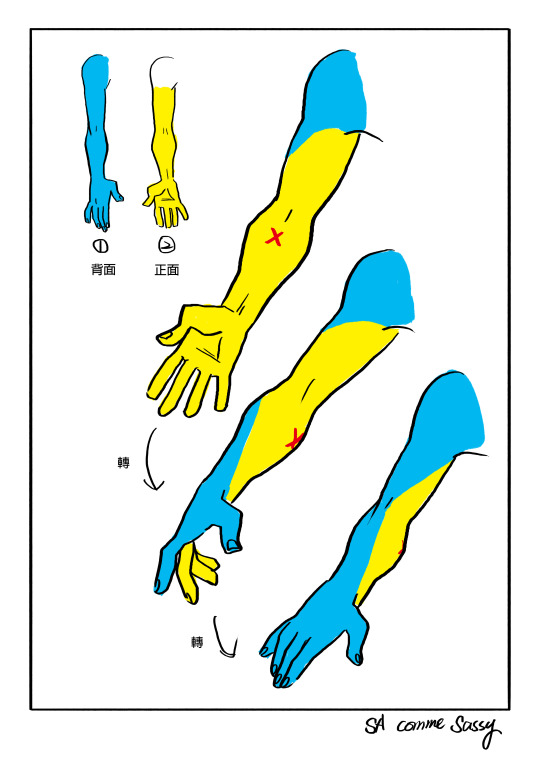
Tips on Drawing Hands Tutorial
Hope this is helpful!
How To Write Emotion
So you’ve got your characters, but you’re still attempting to figure out how to make sure they don’t come off as emotionless robots? You’ve come to the right place!
The best strategy I’ve found for making sure your characters don’t come across as completely apathetic without it breaking the veil of the story you’ve created is by telling the characters emotions without explicitly saying the emotion. Your readers are smart, I can promise you they’ll figure it out.
Do NOT say things like; “He smiled happily.”
If he’s smiling, the readers will know he’s probably happy. Your best bet would be to either leave it as “He smiled” or if you want to be more descriptive talk about how he’s feeling other than happy. Is pride welling in his chest? Are there butterflies in his stomach? Can he feel tears forming in the corners of his eyes? Those were very different types of situations that you just thought of, wasn’t it? It also paints a better picture than happy. On average, the more your reader can picture something, the better attached they can get to the story.
Examples;
His stomach dropped to somewhere beneath his toes, and he felt an instant urge to vomit. (Describes; Dread)
She dragged her feet the whole way, lips pressed into a fine line. (Describes; Reluctance)
They could not quite manage to stifle their yawn, wiping at their eyes languidly. (Describes; Tiredness)
He could feel his cheeks flush as he averted his eyes towards the floor, taking a sudden interest in his shoes. (Describes; Embarrassment)
The easiest way to write emotions is just to think about what you feel when those emotions come to you. If possible, attempt to trigger some of those emotions in yourself. Think about an embarrassing moment, or watch a cute dog video, or a sad movie. If you’re typically unphased by the emotion you’re attempting to write, try to ask a friend what they feel.
The Great Recession Killed Home Ownership in the U.S.


Everything Is Awful and I’m Not Okay: questions to ask before giving up
Are you hydrated? If not, have a glass of water.
Have you eaten in the past three hours? If not, get some food — something with protein, not just simple carbs. Perhaps some nuts or hummus?
Have you showered in the past day? If not, take a shower right now.
If daytime: are you dressed? If not, put on clean clothes that aren’t pajamas. Give yourself permission to wear something special, whether it’s a funny t-shirt or a pretty dress.
If nighttime: are you sleepy and fatigued but resisting going to sleep? Put on pajamas, make yourself cozy in bed with a teddy bear and the sound of falling rain, and close your eyes for fifteen minutes — no electronic screens allowed. If you’re still awake after that, you can get up again; no pressure.
Have you stretched your legs in the past day? If not, do so right now. If you don’t have the spoons for a run or trip to the gym, just walk around the block, then keep walking as long as you please. If the weather’s crap, drive to a big box store (e.g. Target) and go on a brisk walk through the aisles you normally skip.
Have you said something nice to someone in the past day? Do so, whether online or in person. Make it genuine; wait until you see something really wonderful about someone, and tell them about it.
Have you moved your body to music in the past day? If not, do so — jog for the length of an EDM song at your favorite BPM, or just dance around the room for the length of an upbeat song.
Have you cuddled a living being in the past two days? If not, do so. Don’t be afraid to ask for hugs from friends or friends’ pets. Most of them will enjoy the cuddles too; you’re not imposing on them.
Do you feel ineffective? Pause right now and get something small completed, whether it’s responding to an e-mail, loading up the dishwasher, or packing your gym bag for your next trip. Good job!
Do you feel unattractive? Take a goddamn selfie. Your friends will remind you how great you look, and you’ll fight society’s restrictions on what beauty can look like.
Do you feel paralyzed by indecision? Give yourself ten minutes to sit back and figure out a game plan for the day. If a particular decision or problem is still being a roadblock, simply set it aside for now, and pick something else that seems doable. Right now, the important part is to break through that stasis, even if it means doing something trivial.
Have you seen a therapist in the past few days? If not, hang on until your next therapy visit and talk through things then.
Have you been over-exerting yourself lately — physically, emotionally, socially, or intellectually? That can take a toll that lingers for days. Give yourself a break in that area, whether it’s physical rest, taking time alone, or relaxing with some silly entertainment.
Have you changed any of your medications in the past couple of weeks, including skipped doses or a change in generic prescription brand? That may be screwing with your head. Give things a few days, then talk to your doctor if it doesn’t settle down.
Have you waited a week? Sometimes our perception of life is skewed, and we can’t even tell that we’re not thinking clearly, and there’s no obvious external cause. It happens. Keep yourself going for a full week, whatever it takes, and see if you still feel the same way then.
You’ve made it this far, and you will make it through. You are stronger than you think.
thank you so much
Top 10 Tips for Actually Writing
for the writer who can’t seem to write.
- Buy a pencil and paper. Get a writing program and a keyboard.
- Spill all your ideas into a notebook that will never see the light of day. Write down literally every idea you have that even sort of relates to the scene/chapter/book that you want to write until your thoughts converge on a pointed attack.
- Quality vs. Quantity? No competition. Quantity all the way. The more you write, the better you will know your story. Worry about Quality LATER.
- Think about where the idea came from. Go there. Set up a cardboard box and live there. This is your home now.
- What is the coolest, most self-indulgent thing you can think of? That’s what you want to write at this point, until you get some steam.
- Short-term goals, my friends. And by short-term, I mean a minute from now, ten seconds from now. What are you going to do to write RIGHT NOW? Stop thinking about an hour from now, stop thinking about a day from now.
- This is not a book. This is not a book. You are not writing a book. You are writing a story. A story is much easier to take bites out of than a book. A book is a big, scary, colossal thing. Stories are fun and carefree.
- Get yourself a writing friend. A cactus, an old bottle of nail polish, a fish in an appropriately sized tank, etc. Make them hold you accountable.
- Set crazy low goals. Promise yourself you will write ten words today. Ten words and you will be the Best Writer in the Entire World to Ever Exist. Accomplishing things is a morale booster and will urge you to write more.
- Just keep writing. I believe in you.
hey again! I was just wondering what your thoughts were on ‘common’ languages in fantasy worlds? how realistic are they and what might bring them about? (in mine I’m thinking that bc there’s a nation that has explored almost every corner of the world and trades with literally everyone they meet, that most other countries just adopt their trade language as a lingua franca, since they have a network that connects all the major countries, thoughts?)
i think there’s three main reasons a common language might come about in a fantasy world: the peaceful way, the imperialistic way, and the magic way.
the first would probably work in one of two distinct ways, the first a lot like you said: one people who are especially prolific explorers/traders and end up both adapting and spreading their language. *by adapting i mean borrowing words for various goods, weather patterns, and natural feature that might be foreign. if they didn’t have a lot of seafood, the trade language would probably use another culture’s words for those things. if their homeland was forested, the trade language might borrow words pertaining to deserts or mountains from culture who live in those climes
the other way is where the common tongue is a concentrated effort. this probably wouldn’t happen in most traditional fantasy worlds, but depending on the magic of the world, magic users (either secular or religious or both) might develop a common tongue/aid in the merging of major languages. if they are collaborating with each other, they would probably develop universal magic terms and either pick a language or develop a language or a bit of both to be the common magic tongue. over time, especially with effort, this language could pread beyond magic collaboration into common use
the imperialistic way is probably the most realistic but i’m not a sociologist so don’t quote me. if one people colonized much of the world, their language would spread. even if the colonization happened years ago and the colonies have long since revolted, the spread of language can still be seen (*cough* english, french, spanish *cough*)
the magic way… i mean there’s lots of magic ways. say a prometheus-figure descended from the heavens/another plane and taught people language. or maybe there is no common language necessarily but there’s universal translation magic fields around major cities. when it’s fantasy there’s a lot of ways to justify something.
a lot also depends on the size of the inhabited world / known world. it’s a lot easier to say there’s a common tongue around this continent than around a whole world. but then again, this is fantasy so your world could be flat or surrounded by giant snake or something so the whole world might be fairly tight-knit
tl;dr a common language might not be incredibly realistic esp in a fantasy world without (presumably) modern communication and transportation technology. however, there are a lot of ways you can justify one existing that readers will believe. wrt your idea, that’s already more thought than a lot of people give to it, and i’d definitely be able to accept it even if it might not work so neatly in real life.
Q&A: Where do I begin? Anywhere you want.
Hi I can’t decide the timeline to start story. What should be the main event in story?
You included either a lot of backstory or potential plot hooks for your narrative in the question, all of which have the potential to be very interesting stories in their own right, and that’s why we’re going to talk about something else.
Where do I start my story?
This is the question a lot of authors wrestle with and the answer is surprisingly simple — anywhere you want.
You don’t even need to start writing at the start of your story, you can start writing the middle first, or even the ending, and then start from the beginning once you know where you’re going. When I get stuck, I often write the parts in the future which I find interesting and work my way towards it because that gives me a point to aim for.
You have to start somewhere, so start with what interests you.
If you find yourself getting caught up in massive details for a fantasy setting spread across multiple dimensions and lifetimes then… write the ideas down, make note of them, fill up your notebooks with all that detail for your setting bible. That way, you can always come back to it later for more inspiration. Once you’ve done that, move on to your characters. Take a moment to step away from the big world changing events, but on the individuals in your story. The ones who will ultimately be the driving force behind these events.
These smaller, individual stories are the ones which carry the overarching plot and a narrative that could encompass anything from multiple books, or simply be the epic backstory of just one.
So, who interests you? The great hero at the height of their reign? The Rise of the Big Bad? The hero reincarnated into a new world, scrabbling to put together the pieces of their past life? Or, is it someone else? The rebellious general who realizes the evil they serve isn’t creating the world they hoped for? A young scribe keeping notes in the halls of an evil sorcerer who steals the mcguffin and runs off to join the rebels? A battered, down on their luck bounty hunter after the relic so they can sell it to the highest bidder? A frustrated and angry high school student stuck in a small world, who dreams of a more fantastical one, where they’re the hero winth incredible powers, who wants the world they’ve seen in their dreams, but when those dreams become a reality realizes it might be more than they ever bargained for?
Epic narratives (rather than epics, the genre) can come from any narrative. The bounty hunter could be hunting the scribe, who could wind up on a buddy/road trip adventure as they carry a mystical object toward their world’s salvation or destruction. This could be an epic narrative filled with humor, potential romance, and heartache. Or, it could be cliche.
The story could be cliche, or it could be fantastic, it might even be cliche and fantastic. (This is, frankly, my favorite type of story.)
You won’t know until you sit down and start writing it.
You won’t know until you’ve finished your first draft. (All first drafts are terrible.)
You won’t know until you’ve restructured the whole thing in your second, third, fourth, and fifth drafts.
You may end up with a story wildly different from the one you imagined when you first sat down to write. This is part of why the place where you start doesn’t need to be your beginning. Writing is a journey of self-discovery, a discovery of your own creative process.
So, pick somewhere. Don’t worry if it’s the perfect character, or the right place. You can end up at right and perfect, but you can’t expect right and perfect in the beginning. You can accept messy, clumsy, and unsure. Trust yourself to get to the gem you imagine inside your mind, keep working at it and you will. Remember that what you read from a published novel is the end result of a product polished to a shine. Where we start is with a diamond, or even a rock full of diamonds we’ll need to chip out of the mountain before we can show them off. Creation is often a messy, embarrassing process filled with horror, joy, and terror. There may occasionally be hair pulling and screaming. You’ll give yourself a lot more grief trying to avoid this, than you will by just embracing it.
You don’t have to write in a straight line.
You do write one line at a time.
So, start writing.
-Michi
Q&A: Where do I begin? Anywhere you want. was originally published on How to Fight Write.
Pen Names: Should You Use One?
I’ve been mulling this question around in my own head and making lists of pros and cons and I’m honestly still deciding, but I figured writing it all out will help me AND any of you who might also be wondering. So…
Should you use a pen name? Well that all depends. There are plenty of reasons one might want to use a pen name. Here are some that come to mind:
1) You’re a private person. A pen name separates the real you from the persona you’ve created. That means you can have a personal and a book-related social media presence and the two don’t have to connect.
2) You’re trying to establish a brand. Your real name just doesn’t fit whatever book you’re writing or you already have a social media presence under your pen name.
3) Your real name is too long, too short, too whatever, or maybe you plan on changing it. A pen name is a valid option here as well.
4) The content of your book could negatively affect your real life. Say you work a stuffy office job and you write sexy New Adult books that run the risk of getting fired if your boss ever found out. Or you’re depicting your hometown in a not-so-flattering light in your memoirs and you’re worried people will come for you on Facebook.
So with those reasons you might WANT to use a pen name out of the way, let’s look at some reasons not to use a pen name:
1) You want everyone to know you wrote a book. You love the idea of someone from high school picking up your book on accident and realizing that quiet kid from homeroom wrote a whole freaking novel.
2) You already have a sizeable social media presence under your real name. If you’ve got a few thousand Twitter followers under your real name then starting a new one under a pen name seems counterproductive.
3) You like your name. This one’s the most obvious. If it ain’t broke…
4) None of the reasons for wanting a pen name apply to you. I’ve come across some aspiring authors who just think of j.K. Rowling and assume anyone who wants to be successful has to have a pen name. That’s simply not true. If you don’t have a reason to change your name, don’t! Keep it simple!
And that’s all I’ve got! Hopefully this helps someone. I’m still not entirely sure where I stand on my decision too use or not use a pen name yet but if YOU’VE decided you want to use one would you like some advice on how to pick a fitting pen name out? I’d love to write a post helping you guys on that front too.


This terms voice over tutorial will include male/female nsfw pinup voice
over guides ^_^ available this
term>https://www.patreon.com/posts/20757702 :3



 Rambles & Rabble