If you have a difficult time plotting, try writing or outlining your story backwards—from the end to the beginning. Writers who have a difficult time outlining, plotting, and planning their stories often benefit from this technique. You’ll need a general idea of what your story is about for this to work, and of course you need to know the ending, but you might be amazed how helpful this trick can be.
Why is writing backwards easier? Basically, instead of answering the question “this happened… now what comes next?,” you’ll be answering the question “this happened… so what would come right before that?” which narrows the possibilities for your next move and can help keep your story on track. (Incidentally, it’s also the way Joseph Gordan-Levitt’s character comes out on top in the film The Lookout.)
Writing backwards can also help you more tightly weave together your subplots, themes, and character relationships, and keep you from going too far down any irrelevant rabbit holes.
If you don’t want to write or outline completely backwards, remember that you’re free to jump around! If you’re feeling stuck in your story or novel, jump to the middle or end and write a few scenes. Many writers get stuck because they feel they have to write their story linearly from beginning to end, which results in an overdeveloped (and often irrelevant) beginning and an underdeveloped ending.
So go work on that ending! It’s much more likely that you will need to change your beginning to fit your ending than the other way around, so spend time on your ending sooner rather than later!
//////////////
The Literary Architect is a writing advice blog run by me, Bucket Siler. For more writing help, check out my Free Resource Library, peruse my post guide, or hire meto edit your novel or short story. xoxo
When you are writing a story and refer to a character by a physical trait, occupation, age, or any other attribute, rather than that character’s name, you are bringing the reader’s attention to that particular attribute. That can be used quite effectively to help your reader to focus on key details with just a few words. However, if the fact that the character is “the blond,” “the magician,” “the older woman,” etc. is not relevant to that moment in the story, this will only distract the reader from the purpose of the scene.
If your only reason for referring to a character this way is to avoid using his or her name or a pronoun too much, don’t do it. You’re fixing a problem that actually isn’t one. Just go ahead and use the name or pronoun again. It’ll be good.
Someone finally spelled out the REASON for using epithets, and the reasons NOT to.
In addition to that:
If the character you are referring to in such a way is THE VIEWPOINT CHARACTER, likewise, don’t do it. I.e. if you’re writing in third person but the narration is through their eyes, or what is also called “third person deep POV”. If the narration is filtered through the character’s perception, then a very external, impersonal description will be jarring. It’s the same, and just as bad, as writing “My bright blue eyes returned his gaze” in first person.
Furthermore,
if the story is actually told through the eyes of one particular viewpoint character even though it’s in the third person, and in their voice, as is very often the case, then you shouldn’t refer to the characters in ways that character wouldn’t.
In other words, if the third-person narrator is Harry Potter, when Dumbledore appears, it says “Dumbledore appears”, not “Albus appears”. Bucky Barnes would think of Steve Rogers as “Steve”, where another character might think of him as “Cap”. Chekov might think of Kirk as “the captain”, but Bones thinks of him as “Jim”.
Now, there are real situations where you, I, or anybody might think of another person as “the other man”, “the taller man”, or “the doctor”: usually when you don’t know their names, like when there are two tap-dancers and a ballerina in a routine and one of the men lifts the ballerina and then she reaches out and grabs the other man’s hand; or when there was a group of people talking at the hospital and they all worked there, but the doctor was the one who told them what to do. These are all perfectly natural and normal. Similarly, sometimes I think of my GP as “the doctor” even though I know her name, or one of my coworkers as “the taller man” even though I know his. But I definitely never think of my long-term life partner as “the green-eyed woman” or one of my best friends as “the taller person” or anything like that. It’s not a sensible adjective for your brain to choose in that situation – it’s too impersonal for someone you’re so intimately acquainted with. Also, even if someone was having a one night stand or a drunken hookup with a stranger, they probably wouldn’t think of that person as “the other man”: you only think of ‘other’ when you’re distinguishing two things and you don’t have to go to any special effort to distinguish your partner from yourself to yourself.
This is something that I pretty consistently have to advise for those I beta edit for. (It doesn’t help that I relied on epithets a lot in the earlier sections of my main fic because I was getting into the swing of things.) I am reblogging this so fanfic writers can use this as a reference.
A good rule of thumb: a character’s familiarity with another character decreases the need for an epithet (and most times you really don’t need one at all).
what is, in your opinion, the best way to world build? how can you avoid writing a bland, archetypal universe or copying an already existing one? sorry if I’m not being clear, haha, and thanks so much!
Hey there, thanks so much for your ask! I honestly love talking about the world-building process, so I’m really glad you sent this; let’s dive right in!
Best Way to World-Build?
In my opinion, there isn’t a best way to world-build. The “best” process depends on what is needed and what you’ll actually need to know for your writing. What follows isn’t necessarily what I would call the best way, but it’s a good way to cover your bases and opens up a lot of options for going in-depth with details. (It’ll be a bit of a long list, but definitely worth it in the long run.)
For each country you’re going to include or mention in your story, think about:
Name
Capital and major cities, and locations
Border shape
3 most common landforms
Historical sites or places that mean a great deal to the people living there
General economic scheme (ex. capitalist, Communist, Socialist, etc)
Most important laws
Major differences from the character’s homeland
Military setup (different branches, enlistment age, etc)
Climate
Relations with surrounding countries
Societal norms (gender roles, public & professional behavior, etc)
Stance on LGBT+ rights, and treatment of LGBT+ people
Most and least respected professions
Common religions
Stereotypes about this country (any and all)
Common pastimes and hobbies
Popularity of sports, movies, and other forms of entertainment
Genres of music (and possibly stereotypes of people who listen to them)
Language(s) spoken
Beauty standards and the commercialization of them
Commercialization that feeds off of the peoples’ insecurities
For each city you’re going to include or mention in your story, think about:
The “aesthetic” (think of it the way NYC’s aesthetic is taxis, skyscrapers, and nightlife)
Public opinion of street performers
Any recreational centers and common activities
Popularity of a town counsel or the idea of opening to the public for improvement ideas
How well-known the city is by everyone around it, or how much of a tourist attraction it might be
State of educational buildings
Percentage of unemployment versus those who are actively searching for jobs, and how this affects the city’s reputation
3+ popular businesses, maybe food or clothing stores
The way business is generally conducted
Opportunities for nightlife (etc. bars, night clubs, etc)
Usual daytime attire, usual nighttime attire
Any sort of tradition (ex. sharing dreams in the morning, praying before meals, etc)
Stance on more advanced technology
Treatment of different age groups
Again, cliches and stereotypes that might exist of people who live there
Most common architectural style (ex. modern, Victorian, etc)
Commonly seen colors
Any inflation that might exist, local economic troubles
People’s opinion on the government as a whole (then in-depth, if you want)
As you can see, these two lists are very open-ended. I can’t go too far in-depth with world-building ideas and explaining, because it’s all up to you to create this world. Every single item on this list here can be expanded into tons of different things, but if your goal is just to cover your bases and explore needed details then I think this would be a good place to start.
Making Your World Distinct
This can be pretty tough, honestly. There’s (almost) always a world themed around something out there that’s probably more well-known, famous even. Let’s start with everyone’s favorite wizarding world, that of the Harry Potter books. Your world can be as interesting and different as it gets but because it includes wizards, someone out there is always going to relate it to Harry Potter. So how can we avoid this?
There’s one proven way to this this, especially if you don’t want to change your world. Accentuate any and all differences that would set your story apart from a more well-known world. Maybe our wizards’ spells depend on a material transaction, or they won’t work. Maybe there’s some sort of wizarding god who must be pleased to cast a successful spell. Not so much like HP anymore, huh?
Just remember, there’s a huge difference between world-building through details and world-building through exposition. Both are acceptable, but both have their own appropriate time to be utilized. Take a break from telling the reader flat-out how this thing works, and instead reveal it through the world’s details. Not only does this help treat your readers like the competent individuals they are, it also immerses them so much in the world that there isn’t much of a chance to compare your world to others.
Tl;dr—World-building isn’t really something that can be explained for you by someone else. There are certainly questions that exist to help you, but following a guide that works for someone else might not work for you. Explore the details! (And let the reader explore them, too!)
Using multiple POVS means the narrative switches between the perspectives of two ore more characters.
1.Distinct character voices If the voice sounds the same even though it’s written from a different character’s point of view, it creates the impression that there is no difference between the characters. So take some time in not only developing distinct characters, but also in giving your characters individual, distinct voices.
More on creating distinct character voices can be found here
2. Use an indicator for POV switches Always give your readers a clue when the POV switches. The most common way is to write the POV character’s name at the beginning of the section or use the POV character’s name as the title of the chapter.
3. Don’t switch POVs too often If the POV switches every other line, it is very likely that your reader will be annoyed. The most common way is to switch the POV when a new chapter begins. It’s also possible to switch the POV when a new scene begins, but keep in mind tip no.2 and don’t forget to indicate that the POV switches with the next scene.
These are just a few quick, basic things that should be taken into account that I notice a lot of writers get wrong.
Not every trans person is “pre” or “post” HRT or surgeries. It can be pretty stigmatizing to think of trans people’s lives as part of those two categories, especially when those things have not always been part of their plan or they do not want them at all.
There are loads of different kinds of surgeries (even if we’re just talking about genitalia, even if we’re just talking about one type of genitalia).
“Transition” is a really vague term. It includes all sorts of things for all sorts of people, and it has no start and end date usually. It can literally be just coming out and that’s it.
“Transgendered” is not the preferred term because it is not a verb, it is an identity (an adjective).
A great guide for phrasing things in a good way is the GLAAD media guide for writing about trans people.There’s some stuff in there that’s less of a consensus within the trans communities, but it’s very minimal, and what is there is not harmful.
Do not misgender your own characters when narrating things.
“Transwomen” and "transmen" are not the preferred wording. There is a space between them, because as mentioned earlier, trans is an adjective. These are still women and men.
There usually isn’t a reason to feature or talk about surgeries or your trans character’s body in general within the plot. This doesn’t mean “avoid it at all costs” – just ask yourself if it actually is necessary. Most people asking questions related to surgeries and the like do not actually need to include that information.
It’s a common misconception that all trans men have vaginas and all trans women have penises, are perisex etc. The people who have penises cannot be summed up by saying “trans women and cis men” because not only does that exclude a whole lot of nonbinary people, (or how everybody generally is born with a phallus, but I digress) but intersex genitalia is extremely varied, and countless trans people do undergo surgeries. Most post-op genitalia looks indistinguishable from the kind that cis people have.
Trans people are not “born in the wrong body” (some folks may use this phrasing to explain things to cis people who have no familiarity or patience to understand).
We did not “used to be a [GAAB*]” and we are not “biologically [GAAB]” – we are who we say we are, even when we are closeted, even when our shape was different. Some folks who experience gender fluidity are different here and it’s not uniform – but it is still inappropriate for cis people to use these phrases.
he/him =/= “male pronouns” etc. Don’t gender pronouns! Not everyone who uses these pronouns is “male”.
The terms “female body” or “male body” are not helpful in explaining what a certain body is like. They have no uniform way of being, especially taking hormones, surgeries, and intersex persons into account. And if you identify as female, your body is female. It is your body.
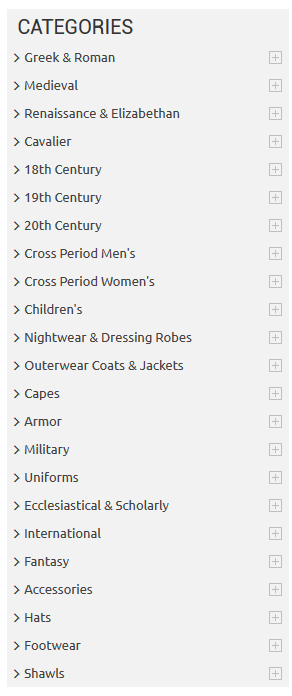
Do you design a lot of characters living in not-modern eras and you’re tired of combing through google for the perfect outfit references? Well I got good news for you kiddo, this website has you covered! Originally @modmad made a post about it, but her link stopped working and I managed to fix it, so here’s a new post. Basically, this is a costume rental website for plays and stage shows and what not, they have outfits for several different decades from medieval to the 1980s. LOOK AT THIS SELECTION:
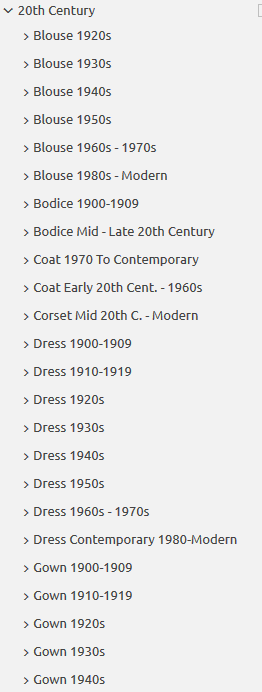
OPEN ANY CATEGORY AND OH LORDY–
There’s a lot of really specific stuff in here, I design a lot of 1930s characters for my ask blog and with more chapters on the way for the game it belongs to I’m gonna be designing more, and this website is going to be an invaluable reference. I hope this can be useful to my other fellow artists as well! 🙂
make sure to read the poem at least 3 times over. skim once, and read twice. Skim and read once each if you don’t think you have enough time. Don’t let the length of it intimidate you.
annotate anything that will help you to answer the question. Answering the question, aside from literary devices on their own, is the most important.
be selective about the quotes and literary devices you find, and identify which ones you can write more about.
– This is a quick post with some tips and advice on writing historically accurate dialogue. This question is asked frequently and I’ve given some advice I get asked for a lot. I hope this helps you all out there, though it is a bit more general. Happy writing!
Familiarize Yourself With The Time-Period
Read books from the time period you’re portraying in your story.
Watch movies, read plays, etc. and you’ll pick up some patterns, words, and phrases.
The #1 way writers learn is reading.
Research the history of the words you want to use.
Pay Close Attention To The Details
Keep the dialogue short, as to not confuse the reader.
Use your words carefully and don’t overdo dated language.
Clarity is more important than historical accuracy.
Syntax is everything.
Use historically iconic phrases (sparingly and with caution).
Historical Text vs. Historical Fiction
Your reader didn’t sign up to read Shakespeare.
They’re aware that you’re from modern day and they will forgive you for using modern language.
Keep in mind the purpose of including this historically accurate language. You want it to feel authentic, but not clunky and convoluted.
Be cautious of going to extremes to make your characters sound accurate and give up the actual meaning of what they’re saying to do so.
Support Wordsnstuff!
If you enjoy my blog and wish for it to continue being updated frequently and for me to continue putting my energy toward answering your questions, please consider Buying Me A Coffee, or pledging your support on Patreon




 Rambles & Rabble