hasilith:

50%off1KLIKES24hours

hasilith:

roymbrog:

literal-ghost:

askoverlordfox:

armaturenine:

Introducing the new 2014.9 version of Armature Nine (A9)! Now available at www.armaturenine.com (complete sets if you scroll to the bottom of the page)

THE AWESOME armatures I keep fussing about on my FA. Go now my fellow artists! buy all the awesome! 

GOOD HEAVENS YES.

OMFG I NEED ONE NOOOOW

GO LIKE THEIR FACEBOOK PAGE! Once they hit 1k likes they are going to post a 50% discount!

Ok so they have posted a 24 hour code for 50% as of 4/8/15

50%off1KLIKES24hours

Go use it on their shop at www.armaturenine.com. the armatures are awesome! but a bit expensive which is why you want the code~! ❤

anemiechen:

themistrustfulmistress:

decorkiki:

A Visual #Fashion Guide For Women – Necklines, Skirt Types & More!

By KikiCloset.com

Rebloggimg for writing reference

THAT scares me! :-O

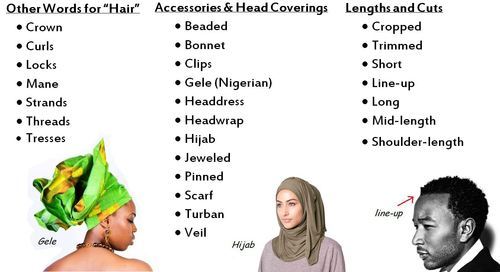
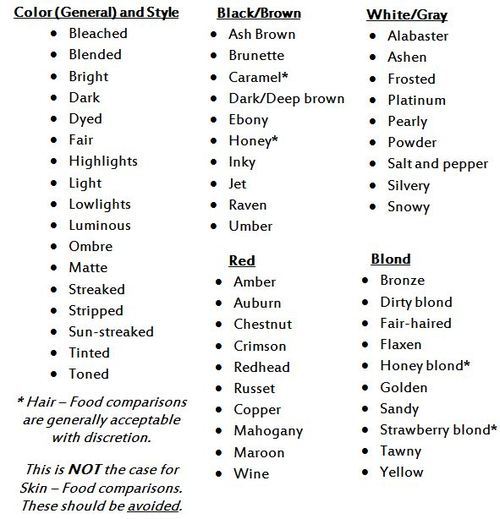
Words to Describe Hair

writingwithcolor:

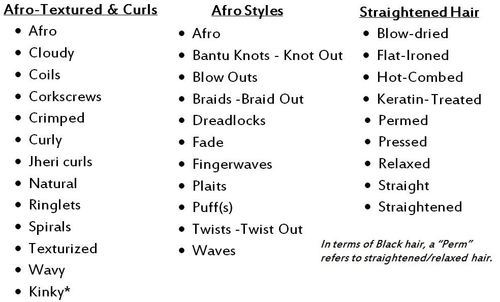
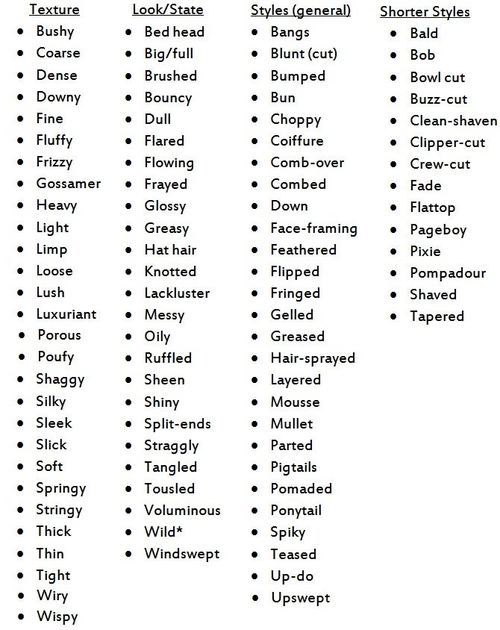
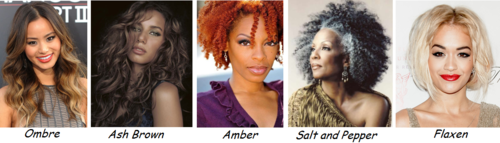
This began as a guide to describing Afro/curly hair but of course, I got carried away. From look and texture of hair, colors and various styles, this guide serves as a thesaurus of sorts for hair, as well as pointers for use in your writing.

image

Culturally Significant Hair Coverings:

  • Know the meaning behind head wear and why it’s worn, when and by whom, such as a Native Nation’s headdress, before bestowing a character with it.

Head Coverings Resources:

Afro – Curly – Straightened

image
image

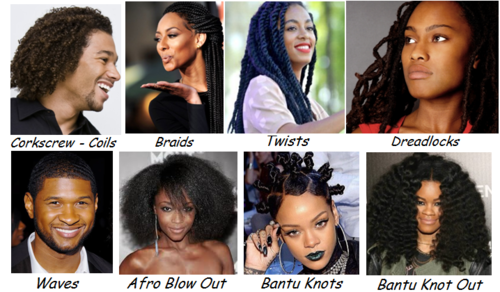
There are many varieties of braids, twists & Afro hair styles; have some more!

Describing Black (Afro) hair:

  • Appropriative Hairstyles: Keep in mind that Afro styles should be kept to those in the African Diaspora, such as dreadlocks, cornrows + certain and many braided styles.
  • Tread carefully describing Afro hair as “wild” “unkempt” “untamed” or any words implying it’s unclean or requires controlling.
  • “Nappy” and “wooly” are generally words to stay away from, the first having heavy negative connotations for many and the latter, though used in the Holy Bible, is generally not acceptable anymore and comes off as dehumanizing due to Animal connotations.
  • There are mixed feelings on calling Black hair “kinky.” I’m personally not opposed to the word in itself and usage depends on the person’s race (I’m more comfortable with a Black person using it vs. a Non-Black person) as well as their tone and context (if it’s used in a neutral or positive tone vs. negatively/with disdain). Get feedback on your usage, or simply forgo it.
  • See our tags “Black Hair” and “Natural Hair” for more discussion on describing Black hair.

Texture – Look – Styles

image
image

Hair Colors and Style

image
image

Writing Tips & Things to Keep in Mind:

  • Combination Words: Try combing words to illustrate look of hair. A character with springy coils that dance across her shoulders with every movement, the man with thick silvery hair slicked back into a ponytail…
  • Mind Perspective: Depending on POV, a character might not know exactly what cornrows or a coiffure style is, at least in name, and it might make more sense if they described the hairdo instead. More defining terms might come from a more knowing source or the wearer themselves. One book I read described a girl’s afro puff as “thick hair pulled up into a cute, curly, poufy thing on top of her head and tied with a yellow ribbon.”
  • POC & Hair Colors: People of Color’s hair comes in all shades and textures. There are Black people with naturally blond and loosely-textured to straight hair, East Asian people with red hair, and so on. Keep that in mind when coding characters if you tend to rely on hair color alone to denote a character is white vs. a Person of Color.
  • Related Tropes: There are tropes and discussion related to People of Color, colored hair, and light-colored hair and features. 

~Mod Colette

amalasdraws:

THANK YOU!! ❤
I’m always very bad in explaining what I’m doing. Cause there is just a lot of trying and painting over it and mashing and mixing colors until I feel it’s good.
So I tried to show you.
I hope this helps!

thecaffeinebookwarrior:

thechekhov:

I made a thing! I was thinking about this for a few days – because I realized that when I was young, I was also frustrated about being given the same advice over and over – without really knowing what it meant!!

Here’s 5 techniques which I have done before which have helped me grow as an artist, which are good for 5-minute warmups or just straight up challenges for your sketchbook! 

Obviously, these are not the ONLY techniques – they’re just the ones I find most fun! And maybe they’re not the most ‘correct’ ones out there, but it’s better than another comic about practicing more, right? 

Good luck to everyone on their drawings!

Honestly, as an artist and illustrator myself, seeing all the posts yelling at newbies to “practice” is so frustrating to me. It feels condescending, and would have had me running for the hills in no time if I was just starting out. This is much more helpful.

frosty-butt:

kyleehenke:

ihaveamicrophone:

darkoverord:

dalehan:

pwnypony:

image

GUYS. GUYS.

GUYS.

HOLY FUCK.

GOOD GUY ADOBE releases the ENTIRE CS2 SUITE. FOR FREE.

image

That means free access to Photoshop CS2 – and that already has most of what you could ask for, really.

All you have to do is create a FREE ADOBE ID.

I am not sure about commercial use, but MAN. FUCKIN’ SWEET DUDE

Reblogging for the greater good.

I’m unlikely to pick it up as I honestly never use PS anymore, but here everyone who follows me. Free stuff.

oh wow this is perfect i was just lamenting that i’d have to buy creative suite for my new laptop WELP

Signal boost for any of my followers who need art programs!

The cs2 programs date back only a few years, and still have much of the functionality of today’s more modern ones. The differences between most of the versions are little more than slight modifications or additions of minor features, and UI changes. Go for it guys!!

Also, in case the page is down, here are the download links + serials.

Signal boost for you too, I downloaded it and use Photoshop CS2 to draw now c: enjoy, this is legit!

stanprokopenko:

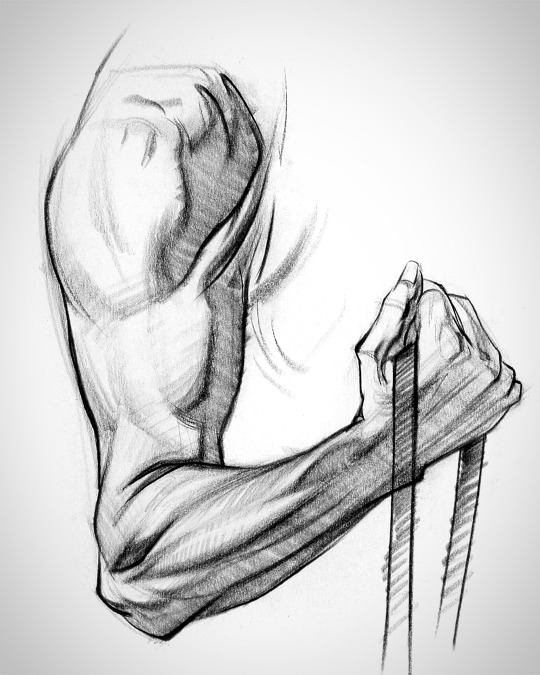
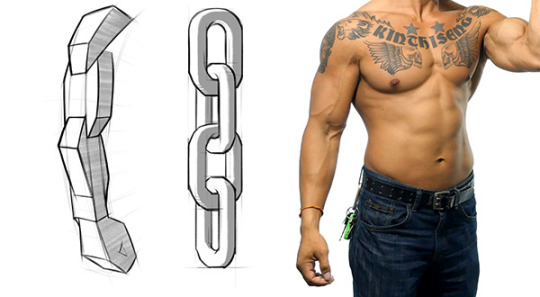
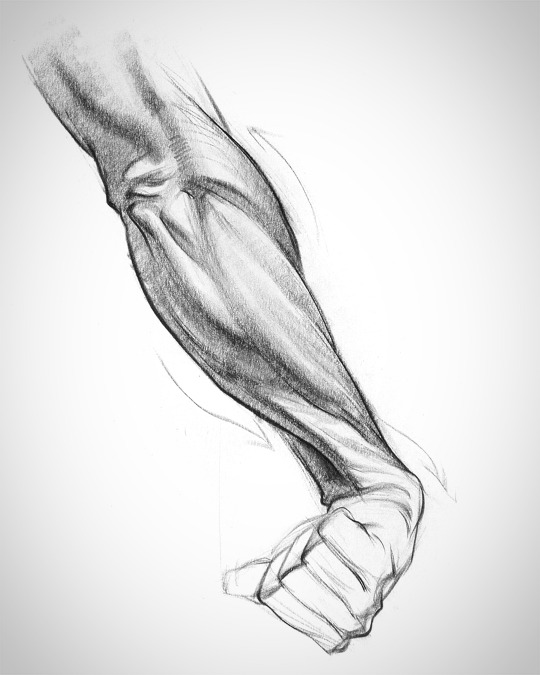
There’s three main groups: the flexors and extensors each take one half of the forearm, and the ridge muscles sit on top like a little tiara. Each group has it’s own unique form. Learning their anatomy will help you design awesomely dynamic arms.

Let’s try to make forearms manageable to draw. This is a body part most artists don’t quite understand. It can be real intimidating if you don’t know the muscles.

image

The arm has a simple chain design and the forms interlock down the arm.

image

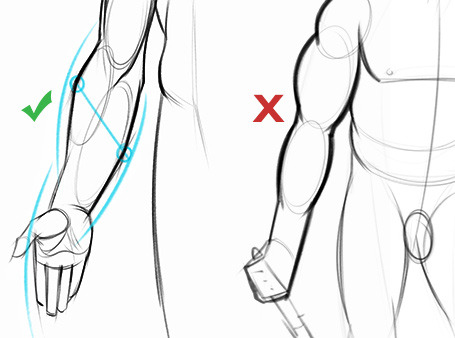
To avoid the snowman effect, use straight, angular lines and look for asymmetries. Compare the apex of both sides of the forearm to understand the curvature better. Notice that the flexors reach lower on the wrist than the extensors and ridge muscles.

image

Look for this kind of thing when you’re drawing the gesture of the muscle groups. A wave rhythm where the curve on one side leads into the next curve on the other side.

image

I’ll explain more in-depth in the video – www.proko.com/179

drawing-with-lena:

image

LESSON FIVE: CONTOURS

“Art, like morality, consists of drawing the line somewhere.”
– G. K. Chesterton

In this week’s lesson, we are going to talk about, as G. K. Chesterton puts it, “drawing the line somewhere.” More specifically – drawing in contour.

In drawing, a contour refers to “an outline, especially one representing or bounding the shape or form of something.” We got a little bit of practice with this when we did the blind contour exercise in lesson two. But in this lesson, I promise, we’ll actually be able to look at what we’re doing (though if you want to go back and give the blind contour exercise another go, it’s never bad practice).

The following are all contour, or linework drawings:

image

The outline doesn’t refer solely to the exterior outline, such as we’d see framing a silhouette, but also to outlines of interior details, such as folds of cloth or curls of hair. All the information in the drawings is conveyed with line.

[Personal note: the sample drawings above are all mine – as a huge comic book fan since the age of 11, contour-heavy artwork has always been near and dear to my heart, and has become a central component of my personal style.]

Keep reading