I’ve been mulling this question around in my own head and making lists of pros and cons and I’m honestly still deciding, but I figured writing it all out will help me AND any of you who might also be wondering. So…
Should you use a pen name? Well that all depends. There are plenty of reasons one might want to use a pen name. Here are some that come to mind:
1) You’re a private person. A pen name separates the real you from the persona you’ve created. That means you can have a personal and a book-related social media presence and the two don’t have to connect.
2) You’re trying to establish a brand. Your real name just doesn’t fit whatever book you’re writing or you already have a social media presence under your pen name.
3) Your real name is too long, too short, too whatever, or maybe you plan on changing it. A pen name is a valid option here as well.
4) The content of your book could negatively affect your real life. Say you work a stuffy office job and you write sexy New Adult books that run the risk of getting fired if your boss ever found out. Or you’re depicting your hometown in a not-so-flattering light in your memoirs and you’re worried people will come for you on Facebook.
So with those reasons you might WANT to use a pen name out of the way, let’s look at some reasons not to use a pen name:
1) You want everyone to know you wrote a book. You love the idea of someone from high school picking up your book on accident and realizing that quiet kid from homeroom wrote a whole freaking novel.
2) You already have a sizeable social media presence under your real name. If you’ve got a few thousand Twitter followers under your real name then starting a new one under a pen name seems counterproductive.
3) You like your name. This one’s the most obvious. If it ain’t broke…
4) None of the reasons for wanting a pen name apply to you. I’ve come across some aspiring authors who just think of j.K. Rowling and assume anyone who wants to be successful has to have a pen name. That’s simply not true. If you don’t have a reason to change your name, don’t! Keep it simple!
And that’s all I’ve got! Hopefully this helps someone. I’m still not entirely sure where I stand on my decision too use or not use a pen name yet but if YOU’VE decided you want to use one would you like some advice on how to pick a fitting pen name out? I’d love to write a post helping you guys on that front too.
– Here’s a quick guide to punctuating dialogue in your story, since quite a few of you have expressed confusion surrounding the subject. A question about this subject was asked by @sakurahiwatari and I decided to make it into its very own post. Happy grammar-ing!
New Speaker ~ When there is someone new speaking, start a new paragraph. Always.
Multiple Paragraphs Of Dialogue From One Speaker ~ Sometimes there are multiple paragraphs of dialogue without a pause from a single speaker, so to punctuate these paragraphs, end each one with a terminal mark before continuing onto the next. Start the next paragraph of continuing dialogue with a new quotation mark, but don’t add one to the end of the last to let the reader know the speaker isn’t finished, or they’ll assume it’s somebody else and get confused.
Paragraph With Multiple Lines Of Dialogue ~ Insert your dialogue tag of choice or description of action following the first sentence, then continue with what the current speaker is saying. There are exceptions, but this helps the reader keep track of who is saying what.
Names In Dialogue ~ If there is a name in a piece of dialogue, or a nickname for that matter, enclose it with punctuation. If it is at the beginning or end of a sentence, put a comma between it and the rest of the line. If it is in the middle, put a comma before and after it.
Elipses ~ Use this when a character trails off. Don’t overuse this though. It truly shouldn’t show up very often and get’s quite distracting to the reader’s own narration when it keeps popping up.
When The Speaker Is Interrupted ~ Use an em dash where the speaker is interrupted, then where they continue their line.
When The Speaker Is Cut Off ~ Use an em dash, then close the quotation. This is mostly used when the speaker is cut off right in the middle of a word, such as “help m—” or “enou—”.
Quote Inside Dialogue ~ When a speaker is quoting someone or something else, the part they’re quoting should be enclosed in single quotation marks (”He is weak. ’Stop it son, stop it!’ Right, not doing that.”). When the single quotation marks end or begin next to the double quotation marks, put a space between them.
Dialogue Stopped By Action Or Thought Instead Of Dialogue Tag ~ When dialogue is interrupted to describe what a character is doing or narrate what a character is thinking, you pause the dialogue without a terminal mark, enclose the action or thought between two em dashes, then continue. For instance: “You wanted a ring”—she played with the little loop on her finger—”but you never cared enough to ask for one.” This rule applies to narration interrupted by action or thought as well.
Questions In Dialogue With A Dialogue Tag ~ The question mark is enclosed in the quotation, the dialogue tag is not capitalized because it is part of the same sentence.
Dialogue Interrupted By Dialogue Tag ~ Commas go at the end of the first quotation and at the end of the dialogue tag. This applies to splitting the dialogue into two sentences, but the dialogue tag would end with a period and the second sentence would begin with a capital letter.
One Line With A Dialogue Tag And Action ~ Dialogue is within quotation, tag follows and is separated from the action by a comma. This is also the case when the action and dialogue tag come before the dialogue, but the dialogue tag is always between the action and dialogue.
When A Dialogue Tag Is Before The Dialogue ~ A comma is put outside the quotation, between it and the tag.
Dialogue Tag After Dialogue ~ Line ends with a comma, then quotation mark, then dialogue tag, uncapitalized. This is because it is all one sentence.
Single Line Of Dialogue, No Tag Or Action ~ Line ended with terminal mark inside of quotations.
Direct & Indirect Dialogue ~ Direct dialogue is when someone is speaking, indirect dialogue is when someone is described as saying something. Indirect dialogue doesn’t require quotation marks, and an example would be: She told him that she was sorry.
If you want to learn more and get more detail about punctuation in dialogue, here is a helpful article where I got a lot of my information.
Support Wordsnstuff!
If you enjoy my blog and wish for it to continue being updated frequently and for me to continue putting my energy toward answering your questions, please consider Buying Me A Coffee.
A mood board is a collage of images, text, colors, or materials. that are used to “to evoke or project a particular style or concept”. Basically, it helps set the “mood” for whatever you are working on. Mood boards are often used by interior decorators and artists but can also be used for writing. I love creating mood boards for each of my characters. It helps me get a a feel for the character I am writing. For example, one of my characters is an elven swordswoman. For her mood board I used images of trees, flowers, decorative swords, and artwork of elves. It really helps when I’m trying to write from her perspective.
To create a mood board, simply find images or text that remind you of your OC. I use google images or even pinterest to find images. Its easy and fun.
2. Take Quizzes for Your Characters
Okay, this may seem a little silly but it totally works. Take a quiz from your characters point of view. Select the answers you think your character would select. I personally like doing this with personality quizzes such as the Myers Briggs tests because I can use the results as a foundation for my characters personality. It’s fun, effective, and actually productive.
3. Create Playlists
I listen to music a lot because it gets my creative juices flowing. So, if I find myself stuck on a particular character, I make a playlist of songs that remind me of that character. I actually like doing this before I start working on a character so I can listen to it while working on them. It sets the mood and gives you better results. Give it a try.
4. Study Some of Your Favorite Characters
Sit down, take out a notebook, and start taking notes on some of your favorite characters from literature, TV, or movies. What made you attracted to this character? What made you hate this character? What is your favorite thing about this character? Answering these questions will help see why you feel that way towards your favorite or least favorite fictional characters. Use your notes as a guideline on how to make readers either hate or love your OCs.
5. People Watch
Yeah, this sounds creepy but it is very effective. Go to the park, take a walk, or simply sit at the window and observe the people you see. Take notes on the little things that they do. Do they walk a certain way? Do they stand up straight or do they slouch? What quirks do they have? Do they drum their fingers while sitting? Do they tap their foot while waiting in line? Write down what you observe and you can apply the results to your characters. It will give your original characters a more realistic touch.
But don’t worry, most writers are and I’m here to help because reading them is making me cRAzY.
I’m writing this because I’ve read three otherwise great romance novels back to back featuring characters dealing with PTSD (or PTSD symptoms) and each one of them made the same dream mistakes. I honestly can’t think of a fiction book I’ve read that didn’t make these mistakes, so I thought I’d compile a handy dandy list of mistakes and how to fix them.
Lucky for you, I have PTSD and a ton of fellow veteran friends who deal with these symptoms.
*This is based on my experience and things told to me by friends. This is not to say that the below doesn’t happen in real life, only that it’s not as common as you might think.
The issue with these dreams is twofold: on one side is the psychological accuracy of the dream and on the other side is how you’re using the dream within the narrative.
Oh an Black Sails spoilers-ish ahead.
1) Stop writing the dream as a shot-by-shot accurate retelling of Traumatic Event.
Listen, not only do dreams seldom follow reality, but our own memories are tricky at best. I don’t remember getting beaten up because a) it was horrifying and we block stuff like that out and b) I was going in and out of consciousness. It would be pretty strange for me to dream something I don’t even fully remember. Our brains are simply not wired to do these vivid factually-accurate cinematic retellings.
My friend dreams things that did happen, but in his own words those dreams are always wrong in some noticeable or bizarre way. For instance, he’s getting chased through the streets of Iraq by a werewolf.
2) Dreams are informed by reality, not direct reflections of it.
It’s entirely likely my friend dreamt of a werewolf in Iraq because I got him binge watching Supernatural and the two ideas merged in his dreamstate. But see, that’s how dreams work.
The trauma event exists as a constant in his subconscious, but he has all this other information right there in his conscious mind all day, every day. In dreams, there isn’t a clear delineation between that information.
My dreams are often dependent on whatever I’ve fallen asleep watching on television. The themes are consistent, but not the content.
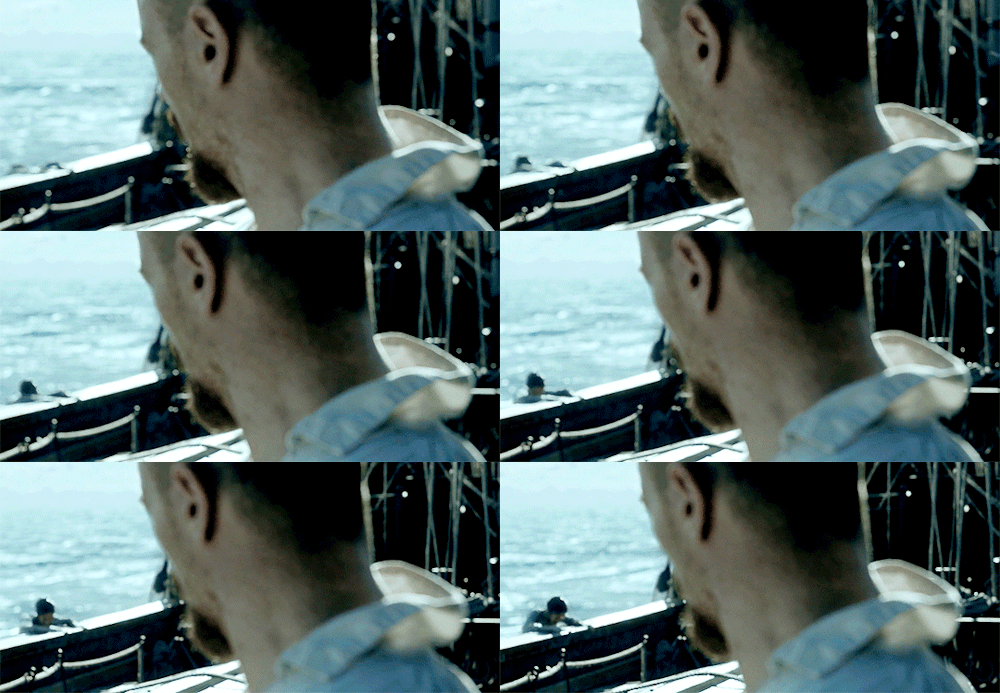
In Black Sails, Captain Flint’s trauma dreams feature his dead partner and friend following him around his empty ship. You have an element of the trauma (the animated corpse of his friend) + his daily existence (his ship). The two things intersect to form these unsettling nightmares as expressions of his fears and grief. He never once relives the event itself in his dreams as shown on screen.
Speaking of…
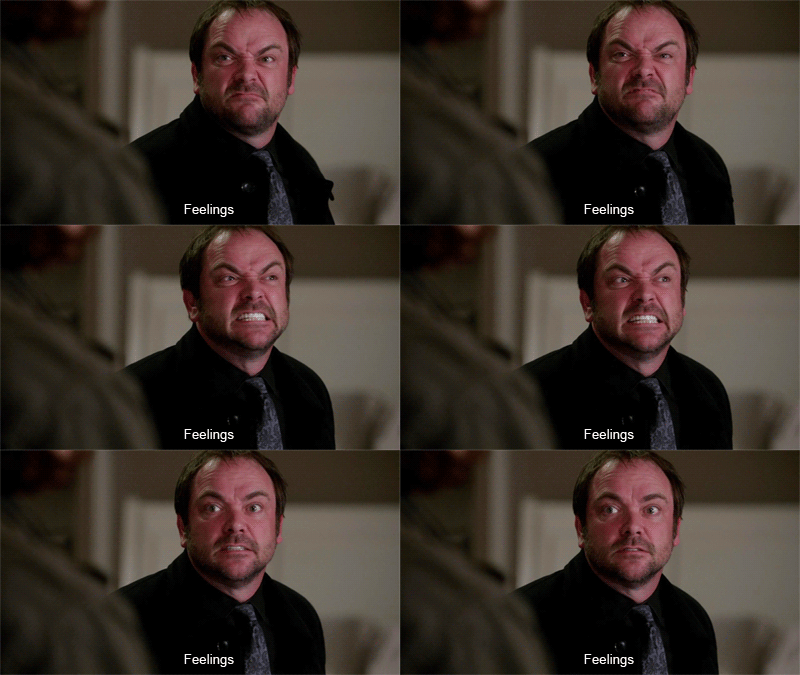
3) Trauma dreams often revolve around feelings, not necessarily the events themselves.
The PTSD package generally includes heaps of shame, guilt, anger and fear. As someone who survived a beating when I should have had control of the situation, my dreams tend to revolve around fear that people will know I’m a fraud or being unable to act in a dangerous situation.
Again, it’s entirely common for trauma victims to not remember large chunks (or the whole thing) of the trauma event. So why should their dreams be stunningly accurate? What we remember are feelings. Real strong feelings.
You cannot go wrong if you write your trauma dream around feelings, not a specific event.
4) If you present trauma dreams as expressions of themes, you can let go of the trauma dream as an exposition dump/way overused suspense trope.
You know you’ve read this: MC has dreams that are a shot-by-shot retelling of Traumatic Event that always cut off right before Traumatic Event, so that the Big Reveal must happen by a discovery later in the novel.
If I were the MC in a book, the easy and common thing would be to use the “dream sequence” as an expository retelling of Traumatic Event as a way to give some backstory to why I might be surly, mistrustful, afraid to try something new, whatever, and to clumsily shoehorn in suspense where there doesn’t need to be.
The much more interesting thing might be if my dreams were inconsistent in content but consistent in theme. In one I’m on an alien planet (because I fell asleep watching the Science Channel again) and the ground opens up and I fall into a pit from which I can’t escape because I am helpless. In another a man is watching me while I sleep where I am again frozen and helpless. This would force the reader to think: what is the recurring issue in these dreams? Why is it important? What is this telling me about this character and what happened to her?
It could be a personal preference, but I’d rather see the Traumatic Event either told in narrative flashbacks (not dreams) or verbally retold by the character in question. Let the dreams tell me something deeper about the character. It’s not that I was beat up, it’s that I feel like a failure because of it. One of these things is a shallow factual detail, the other tells you something about me as a person that I’m sharing with you, gentle reader, because talking about this stuff is healthy.
5) The Traumatic Event doesn’t have to be a big secret.
In Black Sails, we know what happened to Captain Flint’s partner. It happened in real time in the show. That didn’t make his uber disturbing dreams less disturbing or mysterious. Fans still debate exactly what the symbolism was and what they were telling us about James Flint in those moments. We do know from the dreams that he was disturbed, obsessed, and also monumentally guilty and blaming himself for what happened.
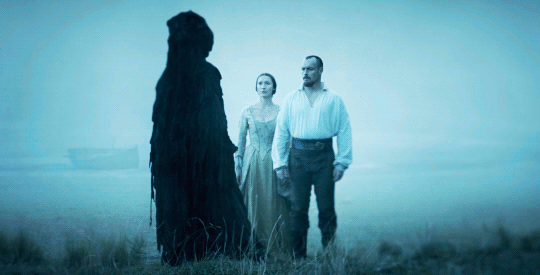
The mystery was perhaps more heightened by the fact that the dreams weren’t direct reflections of reality. We know who this person was, what she believed, and why she died. That Flint is imagining her screaming silently in his ear is horrifying and discordant with what we know to be factual. This adds emotional complexity to his character and the decisions he’s making while suffering these dreams.
^^^this didn’t happen. It was a dream. A real unsettling dream.
Once you let go of the concept of the trauma dream as a literal retelling and exposition dump, you have the entire dreamscape to work in other narrative elements, like symbolism, metaphor, foreshadowing, etc.
Hey everyone, Abby here! Today I want to talk about imagery and descriptions, and how to include them effectively in your writing.
What is imagery?
For the purpose of this post, imagery is defined as “[the use of] figurative language to represent objects, actions, and ideas in such a way that it appeals to our physical senses”. Put simpler, imagery is just a form of writing that helps the reader create vivid mental images of what’s going on.
Why is imagery important?
Do you remember in second and third grade, when your teacher would always ask you if the characters in your story were floating around in space? That’s why imagery is important. Your reader may not be that young, but having (even a vague) idea of where your characters are is better than nothing.
Neglecting imagery in your writing can sometimes make your readers think that a) you don’t care about this place or person, no matter what’s happening or b) this area or this person’s appearance has no relevance to the story at all. Let’s de-bunk these two.
You don’t care about this place or person, no matter what’s happening. This can often come of as unprofessional on your part. If you don’t care about the subject in question, why include it at all? You should probably try to include at least a phrase of description for everything you introduce.
This area or person’s appearance has no relevance to the story at all. Someone is going to find it relevant; many, many readers like to have a base for creating a mental image. As one of these readers, a lack of description of any sort is something I find highly annoying. And the same point above: if it’s completely irrelevant, why include it at all?
How much imagery should I use?
In order from least to most descriptive, I’m going to give four examples of imagery that I’ve seen before using an original character. Accompanying each one will be a quick description with some tips.
She had dark hair, brown eyes, and glasses.
This is a good method of description if you want to give a baseline introduction to a side character. It also works if you want your readers to be (vaguely) aware of a character who’s going to play a larger role in the story later, but in that case I would go a level up.
The phone in her lightly tanned hand reflected on the lenses of her glasses, hiding her dark brown eyes. There was a streak of electric blue in her shoulder-length brown hair.
This one is probably closer to the description level you would want to use for a character who will later be important to the story. You could also use this for major characters if you need the introduction to be a quick one, but if you have the time than you should probably step it up a little bit. Using this level of description for characters who play a very minor role in the story may be superfluous, depending on how they contribute.
Oblivious to the world around her, she scrolled on her phone. The light from the screen reflected brightly on her glasses, hiding the deep brown of her eyes. The cord of a single earbud disappeared in her shoulder-length dark brown hair, almost entangled in the streak of electric blue. She had a light tan that showed on her arms and through the rips of her dark jeans. She had the broad shoulders of someone used to fighting for her way and wore a t-shirt from a band she was sure nobody had heard of.
This is the general way I would go about introducing a main character. It’s a good way to show a bit of this character’s personality while also giving the reader a good idea of what she looks like. I personally prefer not to go much farther than this, unless there are any details that are screaming out for attention.
The phone in her hand lit up the lenses of her glasses in a cold light, masking the deep muddy brown of her eyes. Hidden behind those glasses were long, thick eyelashes, dark bags, and lightly applied makeup with a cat-eye wing. Her round, lightly tanned face was framed by dark brown shoulder-length hair, though the part at which she wore it revealed a streak of bright blue. She smiled down at the screen, revealing two wide front teeth and a dimple on one cheek. She wore an earbud in one ear, the cord dipping down below her phone before looping back up. Her black jeans, riddled with rips all the way to the upper thigh, were almost the ensemble of her outfit — they would have been if it weren’t for the leather jacket covering the t-shirt representing her favorite band. Masking brightly patterned socks were a pair of lace-up combat boots that climbed up to her mid-calf.
In all honesty, I cannot think of a regular situation in which this would be a suitable first impression. That is, unless your PoV character has a thing for recognizing every little detail or has an hour to spare to notice every single detail of this character. If you find yourself reaching this level of description, you wander into the dangerous info-dump zone.
Instead of introducing everything at once like this, try to include it all through context. Maybe at some point a wind picks up and she hugs her leather jacket tighter for warmth; that’s a lot better than just stating she’s wearing one.
Including Imagery in Your Writing
We got a little taste of the “levels” of imagery, but what else can we use hose levels for? Here’s a little set of guidelines that I like to follow in my own writing.
Level I Imagery
Use this one for:
Bare basics introductions
Moments when there’s not enough time for anything more
Somewhat relevant details that you think the reader should be aware of in the moment
Baseline description for a character that will be important later (usually in rare cases)
Characters that have less than five lines or don’t play a large role in your story
A quick run-down of a new place that the characters won’t be spending much time in
Returning to already established details in your story
Introducing details that are important to the story in the moment but may not play a large role later
Level II Imagery
Use this one for:
Describing characters that will be important later
Quick introductions of main characters
Regular introductions of side characters
An object or theme that will be important or recurring in the story
A place that the characters will be spending a moderate amount of time in
Introducing new details that may later become important in the story or that your PoV character would take the time to notice
Level III Imagery
Use this one for:
Introducing main characters in regular situations
A place that your characters will be returning to a lot or that will play a large role in the story
Anything major in your story that you want to draw your reader’s attention to
You’ll notice that I didn’t include anything about new details in the third level of imagery; if a detail is important enough to warrant an entire paragraph of description, if should probably be included in the main introduction.
So, that’s all I’ve got for today! In the future I’m going to make a post about actually writing with imagery that branches off of this one. Now that I’ve talked about how to include it, I should probably give some tips for how to actually write it. (Great planning on my part.)
If there’s anything you want to see me talk about in my next post or if you have any questions about this one, please don’t hesitate to leave a message in my ask! Until next time, much love! <333
I’m asked at least once a week how to get published. Once upon a time, this was a very straightforward answer:
1. Write a novel.
2. Write a query letter.
3. Send the query letter to agents or to editors.
4. Rinse and repeat until said agents and editors ask to see the rest.
5. Rinse and repeat until they see the rest and ask to buy it.
5. In the case of multiple offers, speak to all parties on the phone and see which one makes you feel like the prettiest pony.
Here were things you did not do:
1. Pay to be published.
2. Pay your agent anything besides 15% of the sale price of your book and your royalties.
3. Pay for any of the costs associated with being published such as cover design, editing, printing, hiring of performing bears, etc.
4. Do anything other than write and be paid for writing.
But now there are many ways to be published. Self-publishing and small publishers no longer have the same stigma attached to them. It is no longer the most obvious thing to say: to get published, write a query letter and submit it to an agency or a publishing house, DONE.
Instead, you must ask yourself: what is my goal in publishing?
If your goal is to write a book that you hope will appear on the shelves of Barnes & Noble, CostCo, and supermarkets everywhere, you still need to follow the first set of steps. A traditional publisher is still your only way to get into all of those places. And if you really do have your eye on stands in supermarkets and Sam’s Club and airports, you not only need a traditional publisher, but you need a large traditional publisher of the sort that generally exists in New York and is called something like Little, Brown, or Scholastic, or Random House. You will also need an agent.
You will need, as I said before, to do all of the steps I first listed.
If your goal is to write a book that you’d like to see on shelves but are fine with those shelves being the ones in specialty stores or libraries or schools, a smaller traditional publisher might be a good option for you. This is especially true if you’ve written a less commercial book. (here is a good way to judge if something is commercial: can you imagine your mother, your hair dresser, your veterinarian, and your brother in law all reading it? if so, it is super commercial. Commercial =/= good. It merely means many people will pick it up).
These smaller houses will carry the burden of editing and printing and marketing for you, but they won’t always have the clout to get your book into major stores. They are, however, often less competitive than the larger New York houses, and they will often give you more personal attention and promote your book for longer. You don’t always need an agent to submit to them either, though I recommend an agent if you’re pursuing a full-time career in writing.
But if your goal is only to be read, or to if you have a keen marketing mind and want to represent yourself, self-publishing is an emerging option. You’ll have all of the control, and there will be no rejection letters in your future. But you’ll also carry the entire burden of cover design, editing, printing, formatting for digital distribution and, most importantly, marketing and publicity. I was a self-representing artist, and success is possible, but it will look different than success at a traditional larger house, and it will ask different things from you. You will not, at this point, ever walk into a Sam’s Club and see a self-published title sitting on the table out front. It is very possible to be a writer without Sam’s Club. But it’s important to keep that in mind if a big commercial career is what you long for — the book on that table bears the logo of a large traditional publishing house.
A note: There are several companies that offer to help you with self/ digital-only publishing at the moment, but I’m not convinced of their usefulness at this point. I think it’s a little too soon to see how they’re anything but a middle man at this stage. My feelings are if you’re going to dive into the digital world, you should be doing it because you want the freedom and control in your own hands.
What it comes down to is that you need to be honest with what you need out of your publishing experience. Unhappiness comes from wrong-headed expectations and targeting the wrong house. If you long to see your book at O’Hare airport, you’re going to have a miserable experience self-publishing. If you want to publish a serial story in ten parts over two years, you’re going to have a hard time pitching it to a traditional house. Don’t expect a small house to suddenly change its stripes and drop a quarter million marketing budget on your novel.
DO YOUR RESEARCH.
Make a list of books and careers that you admire and would like to model, and then work backward to find out how those authors ended up where they were. And if something sounds too good to be true, it is. Consider suspect any option that seems like it doesn’t require rejection and work and practice and polish and scrabbling of your hands and teeth. This is the best job in the world, which means there are a lot of people who are fighting for it. If you really want it, you’ll fight alongside with them.



 Rambles & Rabble